What Is AI Postcard Marketing?
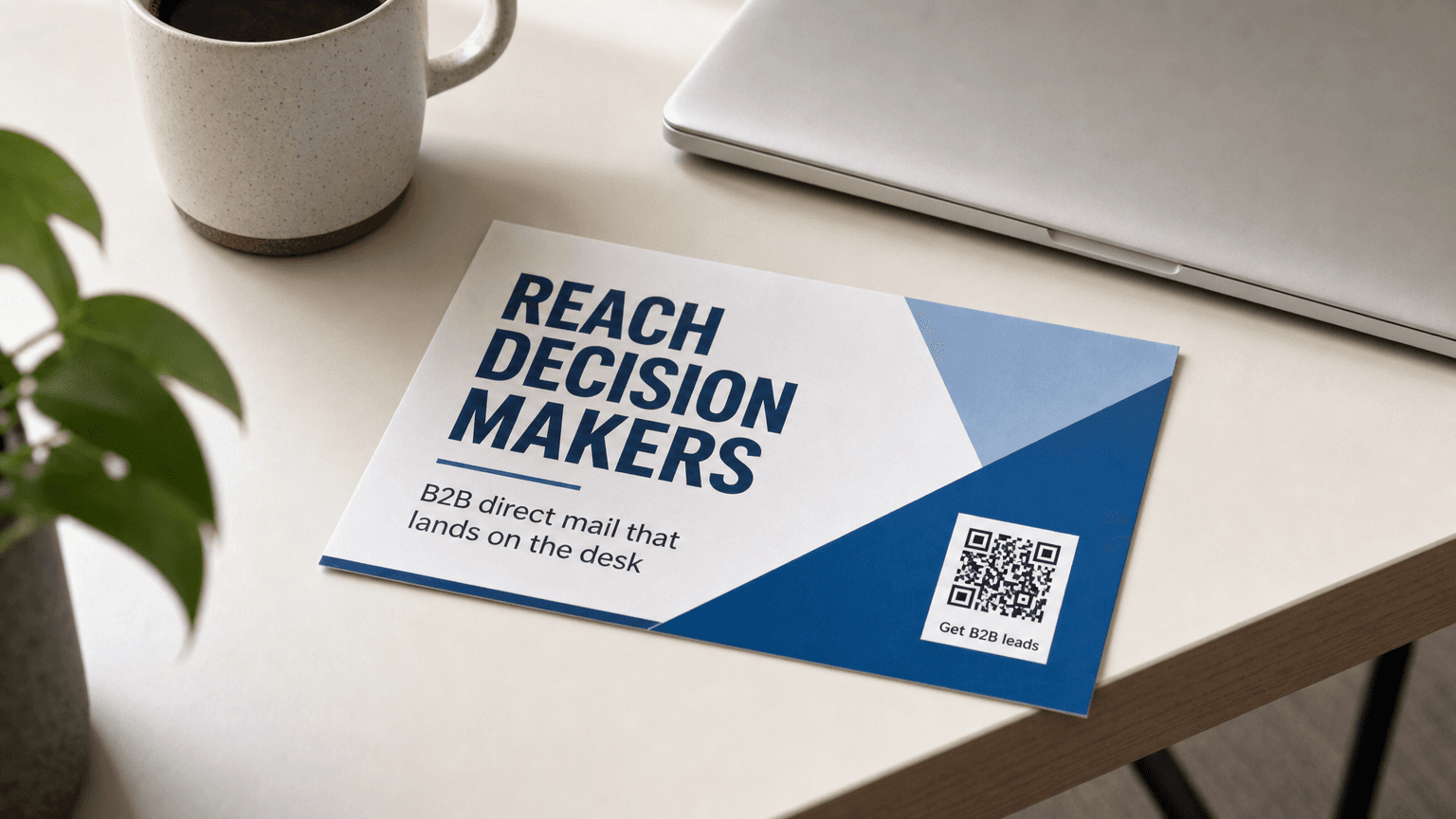
AI postcard marketing refers to a new generation of platforms that use artificial intelligence to automate every step of a direct mail campaign — from analyzing your business and designing postcards to selecting the right audience and handling printing, postage, and delivery. Instead of spending weeks coordinating between designers, printers, and mailing houses, business owners can launch a professional postcard campaign in a matter of minutes.
Traditional postcard marketing has always been one of the most effective forms of local advertising. Study after study confirms that physical mail earns higher response rates, longer brand recall, and greater trust than most digital channels. But it came with serious friction: you needed a graphic designer, a print broker, a mailing list vendor, and a fulfillment service — or an expensive agency to manage all four. That complexity kept direct mail out of reach for many small businesses.
AI postcard marketing eliminates those barriers. A modern AI-powered platform can visit your website, analyze your brand colors and imagery, understand your services, generate professional postcard designs, identify your ideal audience by geography and demographics, and then print and mail the finished postcards — all from a single interface. The business owner provides direction and approval; the AI handles the heavy lifting.
How AI Is Changing Direct Mail
Artificial intelligence is not just automating existing workflows — it is fundamentally changing what is possible with direct mail. Here are the four areas where AI is making the biggest impact.
Business Analysis and Audience Discovery
The first challenge in any postcard campaign is knowing who to reach. Traditional direct mail required purchasing mailing lists from third-party brokers, often with limited filtering options and questionable data quality. AI flips this model by starting with your business.
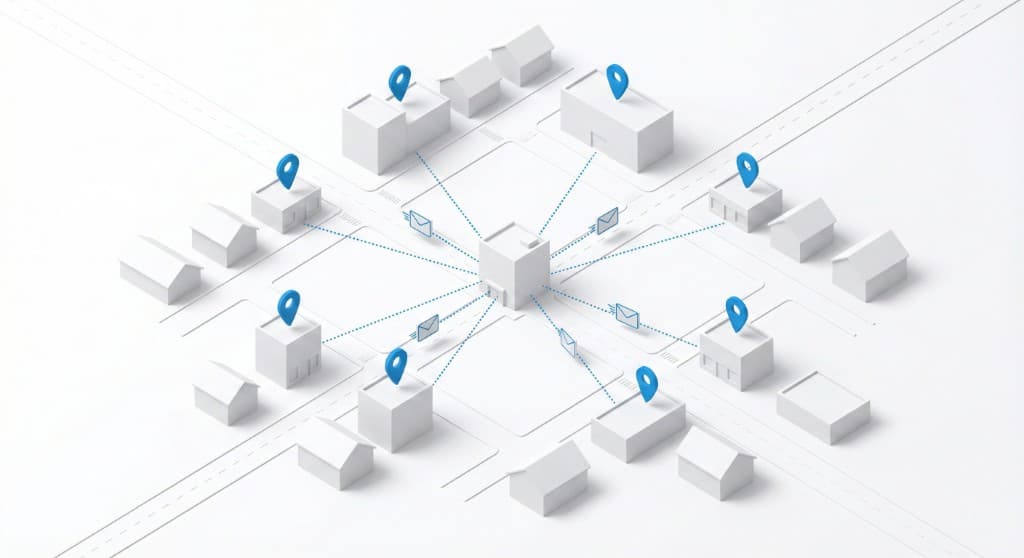
When you enter your business URL or describe your services, an AI platform can analyze your industry, service area, pricing tier, and ideal customer profile. It then cross-references that information against publicly available data — property records, new mover databases, business registrations, demographic data — to build a highly targeted audience. A roofing contractor in Denver, for instance, might automatically receive a list of homeowners within 15 miles whose homes were built before 2000 and are valued above a certain threshold. That level of targeting used to require a data analyst and a significant budget. Now it happens in seconds.
Automated Design Generation
Design has historically been the most expensive and time-consuming part of a postcard campaign. Hiring a freelance designer might cost $200 to $500 per design and take a week or more in revisions. Agencies charge even more.
AI design generation changes the equation entirely. By analyzing your website, logo, brand colors, and imagery, AI can produce multiple professional postcard layouts in seconds. These are not generic templates with your logo dropped in — modern AI design tools understand layout principles, visual hierarchy, and print specifications. They generate unique compositions that reflect your brand identity, include compelling calls to action, and meet the technical requirements for commercial printing.
You review the options, request adjustments if needed, and approve the final design. What used to take days or weeks now takes minutes, and the cost is included in the platform rather than billed as a separate line item.
Smart Targeting
The best postcard in the world is wasted if it lands in the wrong mailbox. AI targeting goes beyond simple geographic selection. It can incorporate household income, home ownership status, property age, recent life events (like moving or listing a home for sale), and behavioral signals to build an audience that is genuinely likely to need your services.
More importantly, AI targeting is iterative. As you run campaigns and track results, the system can learn which audience segments convert at higher rates and suggest refinements for future mailings. This feedback loop — which is standard in digital advertising but has been nearly impossible in traditional direct mail — is one of the most powerful advantages of AI-driven platforms.
End-to-End Fulfillment
In the traditional direct mail workflow, fulfillment is where most campaigns stall. After the design is approved, someone needs to prepare print-ready files, coordinate with a printer, arrange for addressing and sorting, apply postage at the correct rate, and deliver the finished pieces to the post office. Each handoff introduces delays and the potential for errors.
AI postcard platforms consolidate this entire chain into a single automated pipeline. Once you approve the design and audience, the platform handles file preparation, commercial printing on professional card stock, address verification, postal sorting, and delivery to the mail stream. You go from concept to postcards-in-mailboxes without ever touching a print file or visiting a post office.
Benefits of AI-Powered Postcard Marketing
The combination of AI analysis, automated design, smart targeting, and streamlined fulfillment delivers a set of benefits that fundamentally change the economics and accessibility of direct mail.
- Speed: Traditional postcard campaigns take two to six weeks from concept to delivery. AI-powered campaigns can be launched in minutes and arrive in mailboxes within days. That speed means you can respond to opportunities — a competitor closing, a seasonal surge, a new neighborhood development — while they are still relevant.
- Professional quality without a designer: AI-generated designs meet commercial print standards and reflect your brand identity. Business owners who previously relied on DIY templates or skipped direct mail entirely because of design costs can now produce postcards that look like they came from an agency.
- Lower costs: By eliminating separate design fees, list broker charges, and agency markups, AI platforms compress the total cost of a campaign. Many offer all-inclusive pricing that bundles design, printing, postage, and delivery into a single per-piece rate, making budgeting straightforward.
- Personalization at scale: AI can generate variations of your postcard tailored to different audience segments — different headlines for homeowners versus renters, different imagery for different neighborhoods — without multiplying your design costs. As AI capabilities advance, fully individualized postcards with unique messaging for each recipient are becoming feasible.
- Lower barrier to entry: Perhaps the most significant benefit is accessibility. Small businesses — solo practitioners, local shops, independent contractors — can now run the same caliber of direct mail campaigns that were previously only available to companies with dedicated marketing budgets and agency relationships.
Ready to Send Your First Campaign?
Magic Mailer uses AI to design, print, and mail professional postcards for your business in minutes, not weeks.
Try Magic Mailer FreeReal-World Use Cases
AI postcard marketing is already proving its value across a range of industries. Here are some of the most common and effective applications.
Lawyers and Legal Services
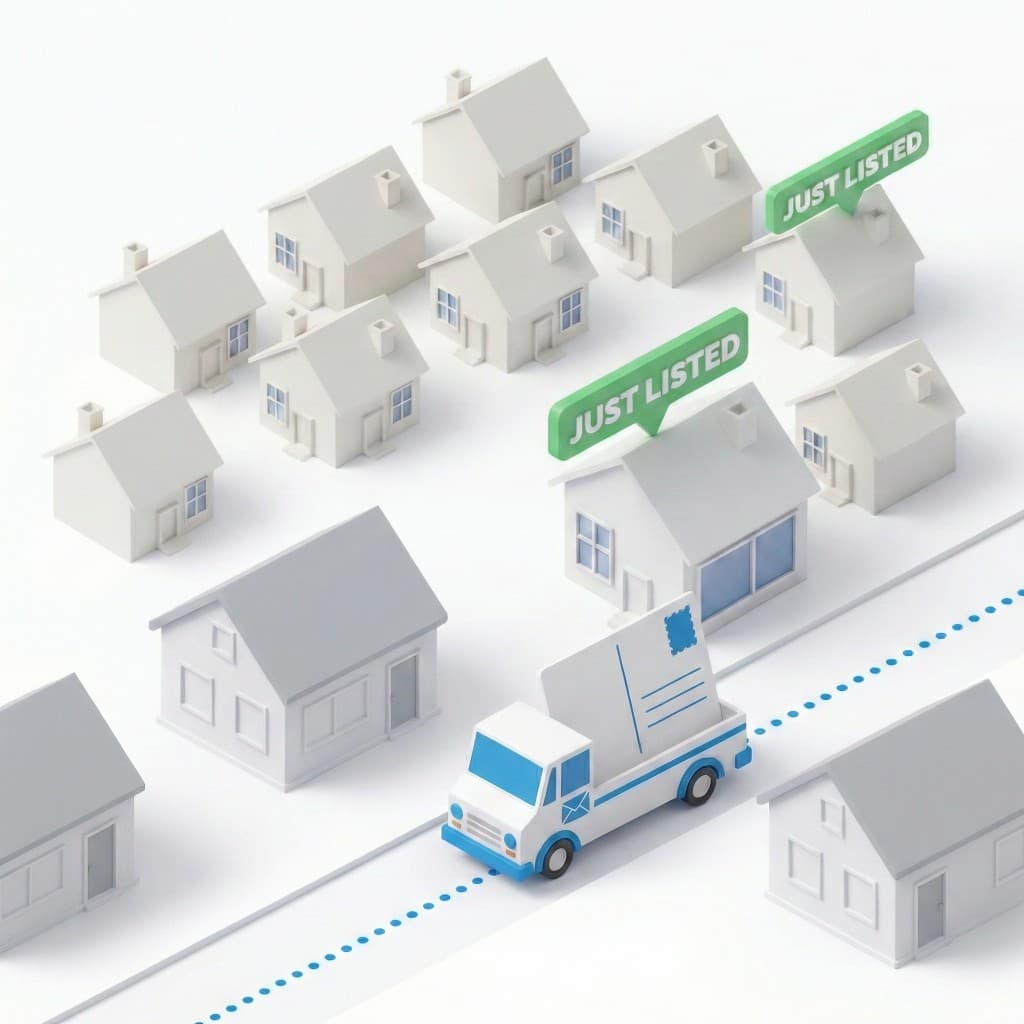
Real estate attorneys and estate planning lawyers use AI postcard platforms to target new property listings in their service area. When a home is listed for sale, the transaction typically requires legal services — title searches, closing representation, contract review. AI platforms can identify these new listings and trigger postcard campaigns automatically, putting the attorney's name in front of potential clients at exactly the right moment. Family law, personal injury, and immigration attorneys use similar trigger-based approaches tied to different life events.
Moving Companies
The window of opportunity for a moving company is narrow: once a homeowner lists their property, they will need moving services within weeks or months. AI targeting can identify homes that have recently been listed or sold and deliver postcards before the homeowner has booked a competitor. The combination of precise timing and geographic targeting makes this one of the highest-ROI applications of AI postcard marketing.
Home Service Contractors
Roofers, HVAC technicians, plumbers, landscapers, painters, and other home service professionals rely on local reach. AI postcard platforms let them target specific neighborhoods, filter by home age or value, and run seasonal campaigns — gutter cleaning in fall, AC maintenance in spring — without any design or mailing list expertise. A contractor can set up a campaign on Monday morning and have postcards arriving by the end of the week.
Retail Stores and Restaurants
Local retailers and restaurants use postcards for grand openings, seasonal promotions, and neighborhood awareness campaigns. A new restaurant can blanket the surrounding five-mile radius with a professionally designed postcard featuring their menu highlights and a first-visit offer. AI handles the design, the targeting radius, and the delivery — the owner just reviews and approves.
How to Get Started with AI Postcard Marketing
Getting started with an AI postcard platform is deliberately simple. While specific steps vary by platform, the general process follows five stages.
- Describe your business. You provide your business name, website URL, and a brief description of your services. Some platforms also ask about your target customer and service area. This information gives the AI the context it needs to make smart decisions about design and targeting.
- AI discovers your brand. The platform analyzes your website, extracts your logo, brand colors, imagery, and key messaging. It builds a brand profile that ensures your postcards are consistent with your existing marketing — even if you have never formally defined a brand guide.
- Choose your audience. Based on your business type and service area, the AI suggests an initial target audience. You can refine it by adjusting the geographic radius, demographic filters, or audience size. Some platforms offer pre-built audience segments for common use cases, like "homeowners within 10 miles" or "new movers in the last 90 days."
- Review AI-generated designs. The platform presents several postcard design options — typically two to four variations — each reflecting your brand and tailored to the audience you selected. You can request changes to the headline, imagery, offer, or layout before approving the final version.
- Print, mail, done. Once approved, the platform sends the design to commercial printing, addresses each piece to your selected recipients, applies postage, and delivers the finished postcards to the mail stream. You receive tracking confirmation when the campaign enters delivery, and postcards typically arrive within three to seven business days.
The Future of AI in Direct Mail
AI postcard marketing is still in its early stages, and the pace of advancement in AI capabilities suggests that the next few years will bring significant new features and refinements.
Hyper-Personalization
Today's AI platforms can generate multiple design variations for different audience segments. The next frontier is true one-to-one personalization — postcards where the imagery, headline, offer, and even the layout are uniquely generated for each individual recipient based on their demographics, property data, and predicted preferences. Variable data printing technology already supports this on the production side; AI is what makes it practical to generate thousands of unique designs without a human designer touching each one.
Real-Time Trigger Campaigns
Imagine a postcard that is automatically generated and mailed the same day a home is listed for sale in your service area, or when a business registers a new LLC within your target zip codes. Real-time trigger campaigns combine AI design generation with event-monitoring data feeds to deliver perfectly timed direct mail without any manual intervention. The business owner sets the trigger criteria once, and the platform handles everything from that point forward.
Predictive Analytics for Optimal Timing
AI is increasingly capable of predicting not just who to target, but when to target them. By analyzing historical response data, seasonal trends, and market conditions, AI platforms will be able to recommend the optimal send date for maximum response. A landscaping company might learn that postcards sent in the third week of March generate twice the response rate of those sent in the first week — and the platform can schedule future campaigns accordingly.
Integration with CRM and Digital Campaigns
The most sophisticated AI postcard platforms are building integrations with CRM systems, email marketing tools, and digital advertising platforms. This creates a unified view of each prospect across channels: a homeowner who received your postcard, visited your website, and opened your follow-up email is a much warmer lead than one who only saw a Facebook ad. AI can orchestrate the sequence and timing of touches across mail and digital channels to maximize conversion.
Direct mail has always been one of the most effective marketing channels for local businesses. What held it back was complexity, cost, and the expertise required to execute well. AI removes those barriers while preserving — and even enhancing — the qualities that make physical mail so powerful: tangibility, trust, and the simple fact that a postcard in someone's hand commands attention in a way that a banner ad never will.
For businesses that have been priced out of direct mail or intimidated by the process, AI postcard marketing is an invitation to reconsider. The barrier to entry has never been lower, the quality has never been higher, and the potential return on investment remains one of the best in marketing.
Ready to Send Your First Campaign?
Magic Mailer uses AI to design, print, and mail professional postcards for your business in minutes, not weeks.
Try Magic Mailer Free