The Great Debate: Mail vs Digital
If you ask ten marketers whether direct mail or digital marketing is more effective, you will get ten different answers — most of them framed as an either/or choice. The truth is more nuanced. Both channels have distinct strengths and weaknesses, and the right strategy depends on your business type, target audience, budget, and goals.
What the data consistently shows is that direct mail and digital marketing are not substitutes for each other — they are complements. Businesses that use both channels strategically tend to outperform those that rely on only one. But to build that integrated strategy, you need to understand what each channel actually delivers. Let us start with the numbers.
Direct Mail by the Numbers
Direct mail — postcards, letters, catalogs, and other physical mail pieces — has been a cornerstone of marketing for over a century. Despite the rise of digital advertising, the data shows that physical mail remains remarkably effective.
- Response rate: 2.7% to 4.4%. According to the Data & Marketing Association (DMA), direct mail achieves an average response rate of 2.7% for prospect lists and 4.4% for house lists (existing customers). These figures have been consistent across multiple years of study and represent one of the highest response rates of any marketing channel.
- Open/read rate: 42%. Research from the USPS and Canada Post consistently shows that approximately 42% of recipients read or scan the direct mail they receive. For postcards specifically, the "open rate" is effectively 100% — there is no envelope to discard unopened.
- Brand recall: 70% higher than digital. A neuromarketing study commissioned by Canada Post found that direct mail produces 70% higher brand recall than digital advertising. Physical media activates areas of the brain associated with spatial memory and emotional processing, creating stronger and more lasting impressions.
- Average in-home lifespan: 17 days. A postcard or mailer sits on a counter, gets stuck to a refrigerator, or stays in a stack of mail for an average of 17 days. Compare that to a digital ad that disappears the moment you scroll past it. That extended exposure creates multiple opportunities for the message to be noticed and acted on.
- Trust factor: 56% say print is most trustworthy. In surveys conducted by MarketingSherpa and others, 56% of consumers say print marketing — including direct mail — is the most trustworthy form of marketing. That trust advantage is significant in industries where credibility matters, such as legal services, financial planning, and healthcare.
Digital Marketing by the Numbers
Digital marketing encompasses a broad range of channels — email, search advertising, social media, display ads, video, and more. Its strengths lie in speed, scalability, and measurability.
- Email open rate: 21%, click-through rate: 2.6%. Email marketing remains one of the most cost-effective digital channels, but engagement has been declining as inboxes become more crowded. The average open rate across industries sits around 21%, with a click-through rate of about 2.6%. Deliverability — actually reaching the inbox — is an additional challenge, with spam filters and promotions tabs reducing effective reach.
- Google Ads average CTR: 3.17% search, 0.46% display. Search ads capture high-intent traffic and perform well for businesses targeting people actively looking for their services. Display ads, which appear as banners on websites, achieve much lower click-through rates but can be useful for brand awareness at scale.
- Social media organic reach: 1% to 5%. Organic reach on platforms like Facebook, Instagram, and LinkedIn has declined dramatically over the past several years. A business page with 1,000 followers might see its posts shown to only 10 to 50 of them without paid promotion. Paid social media advertising extends reach significantly but adds cost.
- Instant deployment. The biggest operational advantage of digital marketing is speed. An email campaign can be sent in minutes. A Google Ads campaign can be live within hours. Social media posts are instant. This speed is invaluable for time-sensitive promotions, rapid testing, and responding to market changes.
- Granular analytics. Digital channels provide real-time data on impressions, clicks, conversions, and cost per action. This transparency makes it easy to measure ROI, identify underperforming campaigns, and reallocate budget quickly.
- Easy A/B testing. Testing different headlines, images, offers, and audiences is straightforward in digital marketing. You can run a test, analyze results, and optimize — often within a single day. This iterative capability is a genuine advantage over traditional media.
Head-to-Head Comparison
Here is how direct mail and digital marketing stack up across the dimensions that matter most to small and mid-sized businesses.
Neither channel dominates across every dimension. Direct mail wins on response rate, brand recall, and trust. Digital wins on speed, analytics, and scalability. The key insight is that these strengths are complementary — which is why integrated campaigns consistently outperform single-channel approaches.
When Direct Mail Wins
Direct mail is not the right choice for every business or every campaign. But there are specific situations where it consistently outperforms digital alternatives.
Local Businesses Targeting Specific Neighborhoods
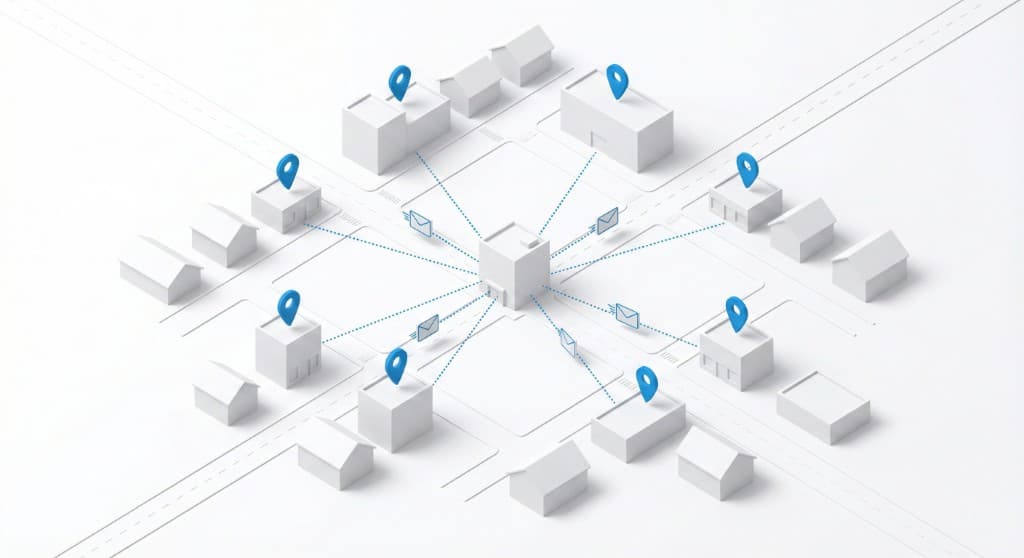
If your customers come from a defined geographic area — a 5-mile radius, a specific set of zip codes, a particular subdivision — direct mail lets you reach exactly those households. You are not paying for impressions from people three states away who will never visit your store. Every postcard lands in a relevant mailbox.
High-Value Services
For industries like legal services, real estate, home renovation, financial planning, and healthcare, the lifetime value of a single customer can be thousands or tens of thousands of dollars. In these industries, the higher cost per piece of direct mail is easily justified by the quality of leads it generates. A homeowner who calls after receiving your postcard is typically further along in the decision process than someone who clicked a Google ad while casually browsing.
Event-Triggered Campaigns
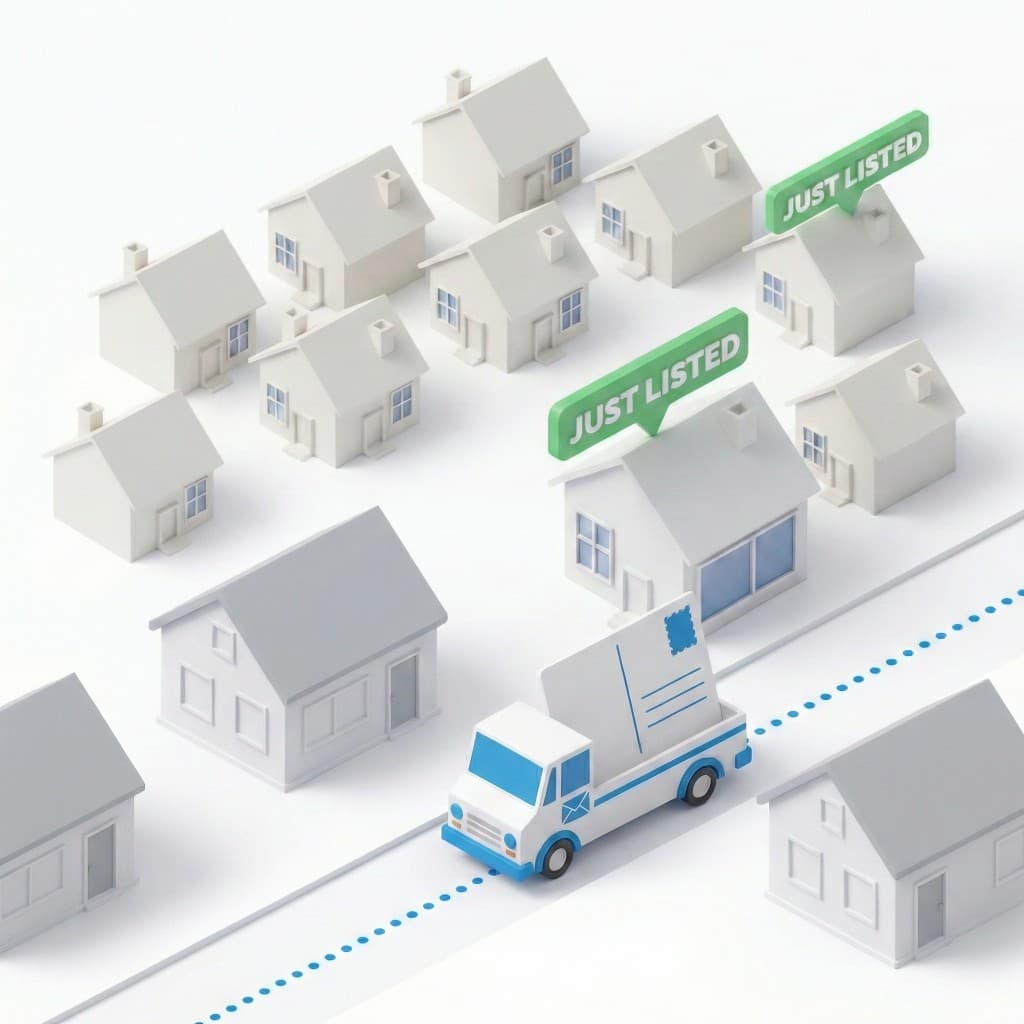
Some of the highest-performing direct mail campaigns are triggered by specific events: a home being listed for sale, a new family moving into the neighborhood, a business opening in a commercial district. These event-driven mailings reach people at the exact moment they need your services, which is why they achieve response rates far above the industry average.
Older Demographics
Adults aged 45 and older tend to engage more with physical mail than with digital advertising. They are more likely to read direct mail, less likely to use ad blockers, and more likely to trust print over online ads. If your target customer skews older — as is the case for many home service, legal, and financial service businesses — direct mail is often the most effective primary channel.
Standing Out in a Digital-Saturated Market
The average person sees between 4,000 and 10,000 digital ads per day. Banner blindness, ad blockers, and spam filters mean that a significant portion of digital marketing spend is simply never seen. Meanwhile, the average household receives only a few pieces of marketing mail per day. A well-designed postcard in a sparse mailbox commands far more attention than a banner ad competing with thousands of others.
Ready to Send Your First Campaign?
Magic Mailer uses AI to design, print, and mail professional postcards for your business in minutes, not weeks.
Try Magic Mailer FreeWhen Digital Marketing Wins
Digital marketing has its own set of clear advantages that make it the better choice in certain scenarios.
Global or National Reach
If your customers are spread across the country or around the world — an e-commerce store, a SaaS company, a national brand — digital marketing is the only practical option. Direct mail to thousands of addresses across hundreds of zip codes is possible but expensive and logistically complex. Digital channels let you reach a global audience from a single dashboard.
Time-Sensitive Promotions
A flash sale that ends in 48 hours, a last-minute event promotion, or a response to breaking news — these situations require instant deployment that only digital channels can provide. Even the fastest direct mail takes several days from print to mailbox. When time is the critical factor, digital wins decisively.
Rapid A/B Testing and Iteration
If you are still figuring out your messaging, your offer, or your audience, digital marketing lets you test dozens of variations quickly and cheaply. You can run two ad variations simultaneously, measure results within hours, and iterate. Achieving the same learning velocity with direct mail would require much higher budgets and longer timelines.
Retargeting Website Visitors
Someone visited your website, looked at your services page, but did not call or fill out a form. Retargeting ads follow that visitor across the web, reminding them of your business. This capability — reaching people who have already expressed interest — is unique to digital marketing and can be extremely cost-effective. Direct mail cannot replicate this without additional integrations.
Very Tight Budgets
You can start a Google Ads campaign for $5 per day or boost a Facebook post for $10. Direct mail has a higher minimum spend — even a small campaign of 100 postcards will cost $100 to $200. For businesses in the earliest stages with minimal marketing budgets, digital channels offer a lower barrier to entry for initial testing.
The Best Strategy: Integrated Marketing
The most effective marketing strategies do not choose between direct mail and digital — they use both channels in coordination, with each reinforcing the other. This integrated approach is sometimes called omnichannel or multichannel marketing, and it consistently produces better results than either channel alone.
Use Direct Mail to Drive Digital Engagement
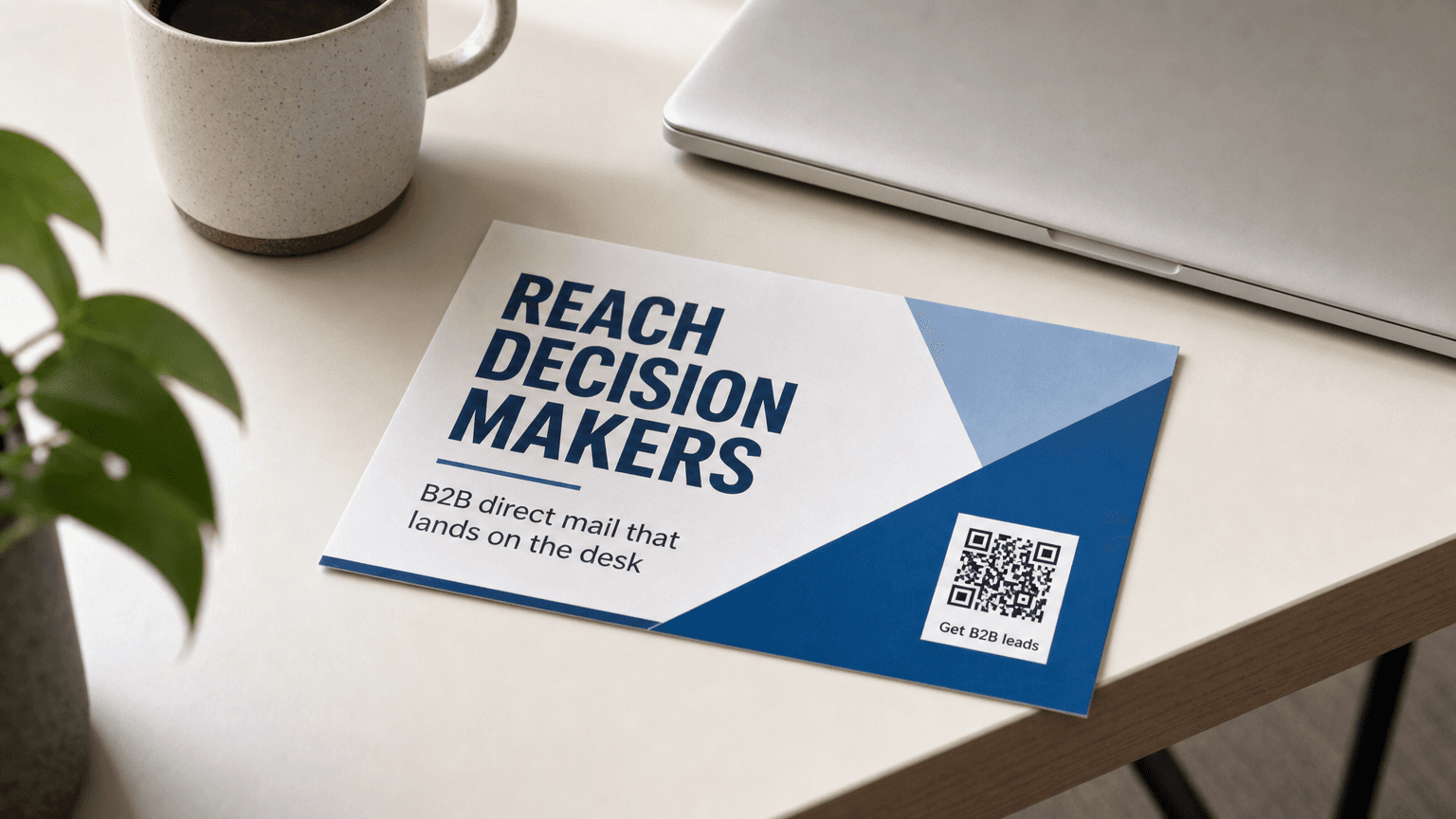
A postcard with a QR code or a short custom URL creates a bridge from the physical to the digital world. The recipient scans the code, lands on a dedicated landing page, and enters your digital ecosystem — where you can capture their email, show them more about your services, and begin a nurturing sequence. The postcard gets attention and builds trust; the landing page captures the lead and provides detailed information.
Use Digital Data to Inform Mail Targeting
Your digital marketing efforts generate valuable data about who is interested in your services — what zip codes your website visitors come from, which demographics engage with your social media, which keywords drive the most qualified traffic. That data can directly inform your direct mail targeting. If you know that homeowners in three specific zip codes are your best digital leads, those same zip codes should be at the top of your mailing list.
Maintain Consistent Branding Across Channels
When a potential customer sees your postcard in their mailbox, then encounters your Google ad, then receives your email — and all three are visually consistent with the same colors, logo, and messaging — your brand builds credibility through repetition. Inconsistent branding across channels, on the other hand, creates confusion and erodes trust. Ensure your print and digital materials share a unified visual identity.
The Multi-Touch Sequence in Action
Here is how an integrated campaign might work in practice for a home services company:
- Week 1: Send postcards to 500 homeowners in your target neighborhoods. The postcard includes a QR code linking to a special landing page with a seasonal offer.
- Week 2: Launch Google Ads targeting the same zip codes with the same seasonal offer. Homeowners who received the postcard now see a familiar message online, reinforcing the brand.
- Week 3: Anyone who visited the landing page (from the QR code or the Google ad) but did not convert sees retargeting ads across the web for the next 30 days.
- Week 4: Send a follow-up postcard to the original list with updated messaging — perhaps a testimonial or a deadline on the offer. This second touch typically produces a higher response rate than the first.
This four-week sequence creates multiple touchpoints across two channels, with each reinforcing the other. The combined effect is significantly stronger than either the postcards or the digital ads would achieve in isolation.
How AI Makes Integration Easier
Historically, running an integrated direct mail and digital campaign required coordinating between multiple agencies, platforms, and vendors. AI-powered platforms are beginning to change that by bringing more of the process under one roof.
Platforms like Magic Mailer use AI to analyze your business, generate postcard designs that match your brand, and select targeted audiences — all in minutes. Because the AI already understands your brand colors, imagery, and messaging, the designs it produces for print are naturally consistent with your digital presence. That visual consistency is critical for multi-channel campaigns and used to require a brand guide that most small businesses do not have.
AI targeting also bridges the gap between physical and digital. The same data signals that help you build a mailing list — geography, demographics, property data — can inform your digital ad targeting. When both channels are informed by the same data, your messaging reaches the same audience through multiple touchpoints, which is the foundation of effective integrated marketing.
As AI platforms continue to evolve, we are likely to see even tighter integration: automated QR code generation linked to personalized landing pages, CRM syncing that triggers follow-up emails after a postcard is delivered, and cross-channel analytics that show the combined impact of your print and digital efforts in a single dashboard.
The direct mail versus digital debate is ultimately a false choice. Each channel has clear strengths. Direct mail delivers higher response rates, stronger brand recall, and greater trust — especially for local and high-value businesses. Digital marketing offers speed, scalability, granular analytics, and lower minimum budgets. The businesses that grow fastest are the ones that understand these trade-offs and build strategies that leverage both channels together. In 2026, with AI making direct mail faster, cheaper, and easier than ever before, the case for integrated marketing has never been stronger.
Ready to Send Your First Campaign?
Magic Mailer uses AI to design, print, and mail professional postcards for your business in minutes, not weeks.
Try Magic Mailer Free