Key Takeaways
- Automated direct mail collapses a six-step, multi-vendor process into a single workflow with three inputs: business name, website, and target area.
- Per the ANA 2023 Response Rate Report, house-list direct mail averages a 5.3% response rate and 161% ROI, outperforming house-list email ROI of 44%.
- Magic Mailer pricing runs CA$3.31 to CA$1.53 per piece (volume-dependent) with printing and postage included, no designer, print shop, or mailing house required.
- 84% of marketers ranked direct mail as their highest-ROI channel in 2024, up from 67% the prior year, per the Lob 2024 State of Direct Mail report.
- High-performing marketers are 32% more likely to use direct mail automation than peers, per the Lob 2025 State of Direct Mail report.
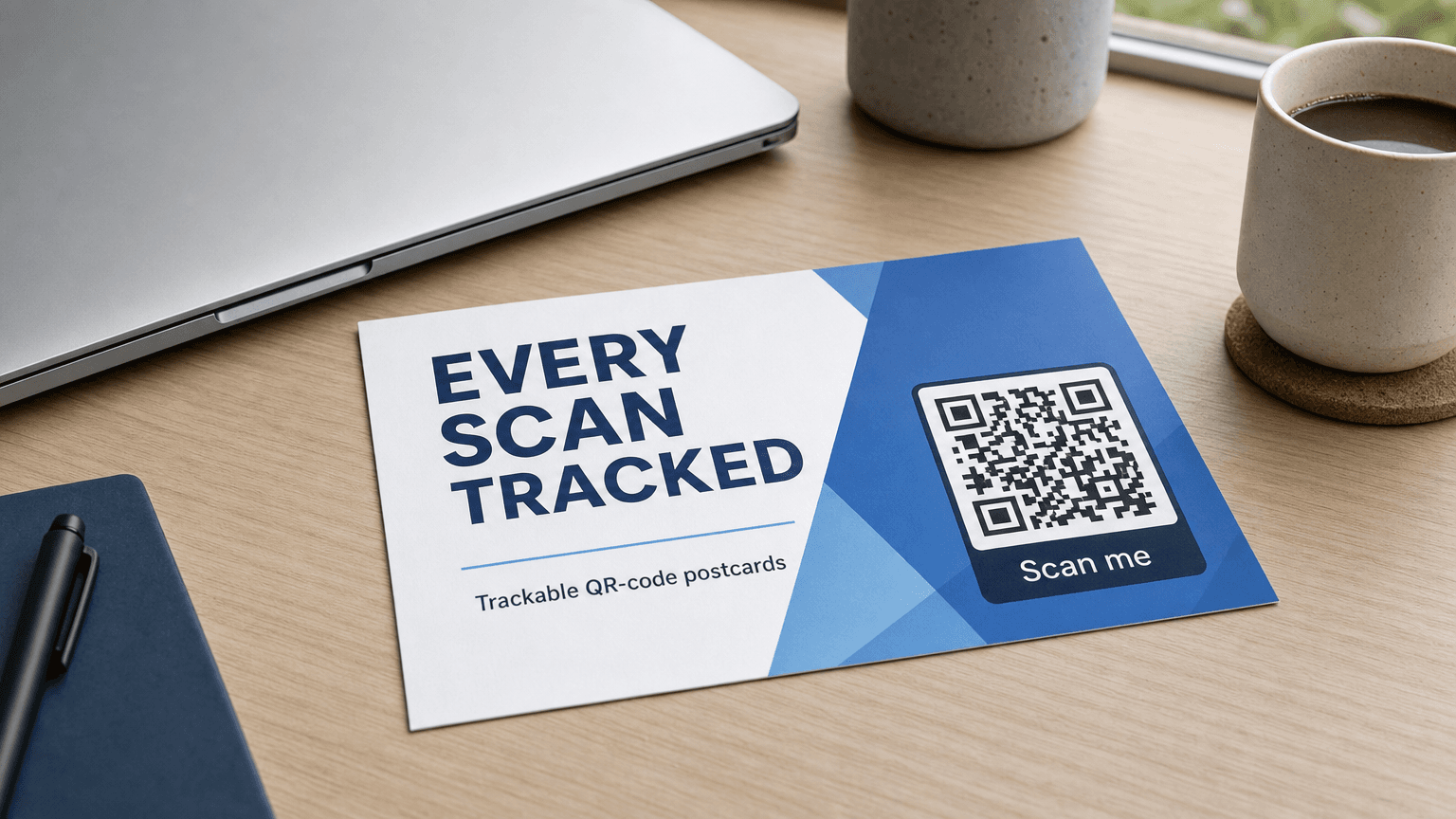
- Every Magic Mailer postcard includes a trackable QR code so physical sends connect to measurable digital engagement.
Sending a physical postcard used to mean coordinating a list broker, a copywriter, a designer, a print shop, and a mailing house, five vendors before a single piece hit a mailbox. Automated direct mail collapses that chain into a single workflow, and the performance data behind physical mail makes that worth understanding in detail.
What Is Automated Direct Mail?
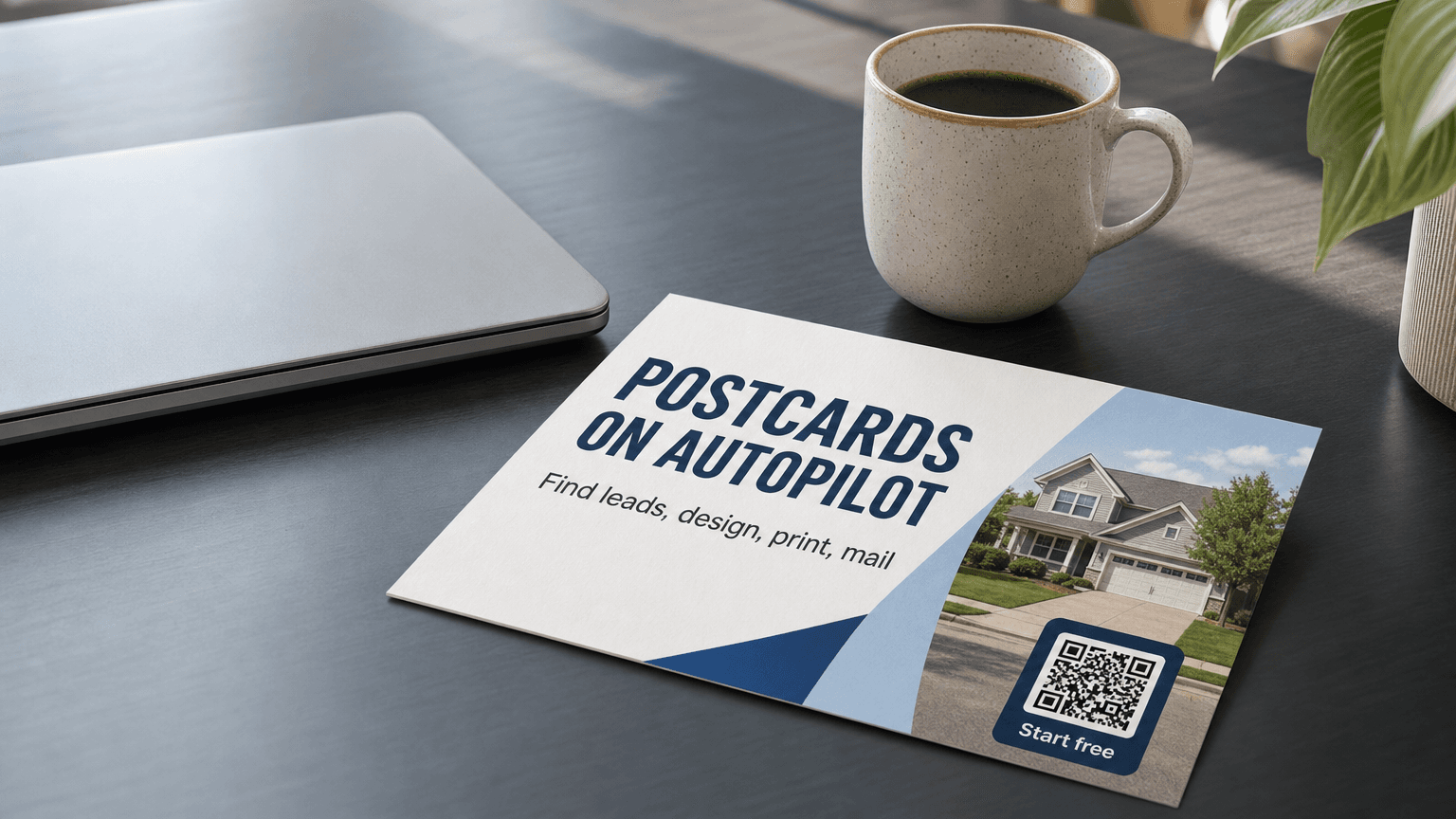
Automated direct mail is a category of marketing technology that handles the full postcard pipeline, audience building, creative production, printing, and delivery, through a single connected system, so a business owner can launch a campaign in minutes rather than weeks without touching a spreadsheet or briefing a vendor.
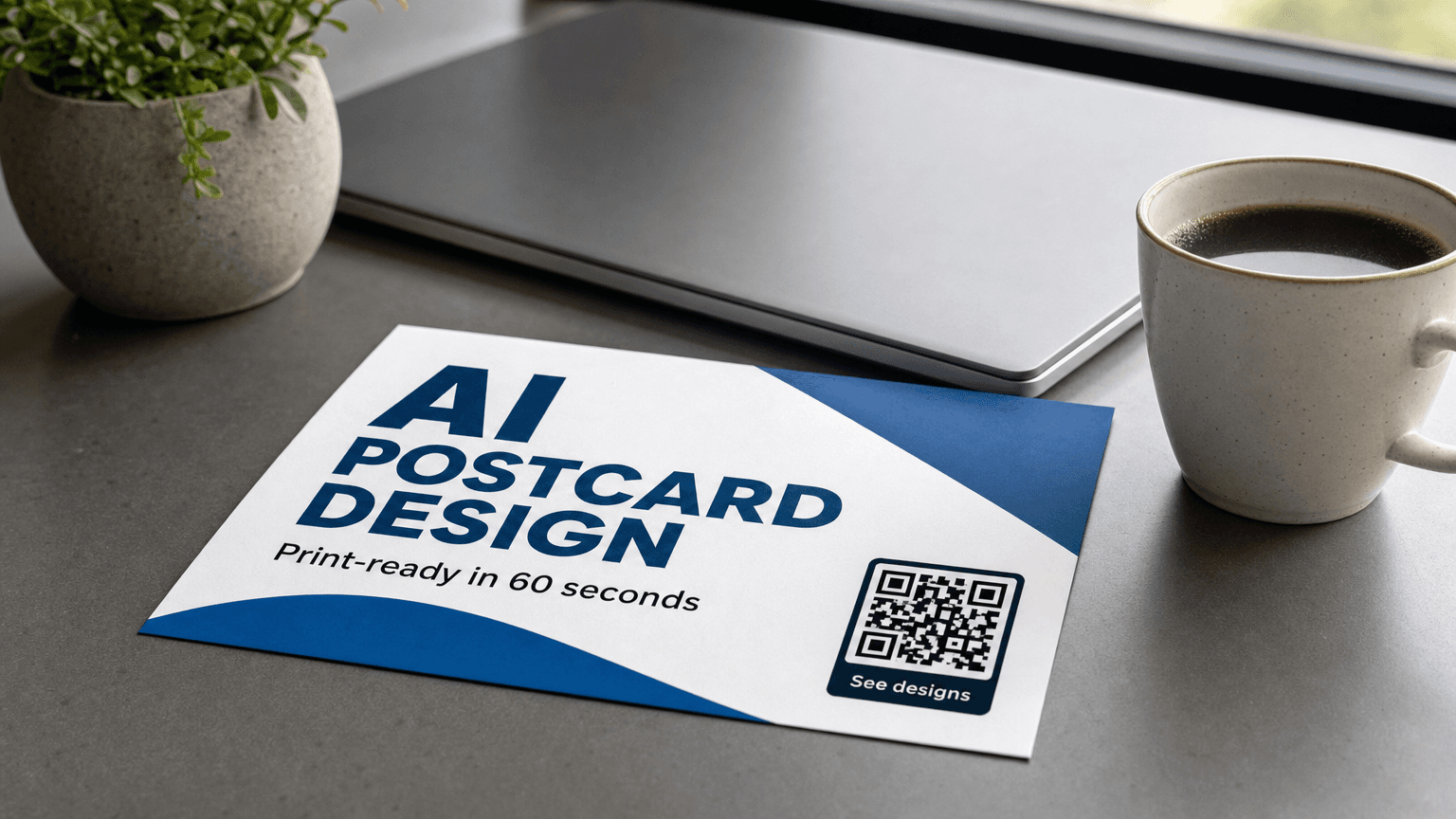
The term covers a spectrum. At one end, large enterprise platforms batch-trigger mail pieces from CRM events. At the other, purpose-built tools like Magic Mailer let a local business enter a name, a website URL, and a target area and receive print-ready AI postcard designs in about 60 seconds, brand colours, copy, and imagery extracted directly from the site. The common thread is that the human operator sets the parameters, and the software handles the execution.
For the purposes of this guide, the focus is on that second category: accessible, AI-driven automated direct mail built for small and mid-sized businesses that want physical mail without the traditional overhead.
Why Direct Mail Performance Numbers Still Surprise Marketers
Direct mail consistently outperforms digital benchmarks on response rate and ROI, with the ANA 2023 Response Rate Report showing house-list campaigns averaging a 5.3% response rate and a 161% ROI, numbers that routinely surprise marketers conditioned to single-digit email open rates.
Here is the full picture from the ANA 2023 report:
| Metric | House List | Prospect List |
|---|---|---|
| Average response rate | 5.3% | 2.9% |
| Average ROI | 161% | 34% |
| Average CPA | US$19 | US$43 |
For comparison, the ANA 2023 report puts house-list email ROI at 44%, meaning physical mail to existing customers outperforms email to the same audience by nearly four times on ROI. Postcards are the dominant format: 76% of marketers reported using them for house-list campaigns per the same report.
The trend is moving in mail's favour, not against it. Per the Lob 2024 State of Direct Mail report, 84% of marketers ranked direct mail as their highest-ROI channel, up from 67% the prior year. The same report found 85% of respondents said direct mail delivers the best response rate and 84% said it delivers the best conversion rate of any channel they use.
The neuroscience supports the numbers. A study from the USPS Office of Inspector General conducted with Temple University found that physical advertising generates a stronger emotional response and produces easier recall than digital equivalents, a finding that helps explain why response rates hold up even as digital attention fragments.
These are averages and benchmarks, not guarantees. Your results will depend on offer, audience, creative quality, and timing. But the direction of the data is consistent: physical mail earns attention in a way that is genuinely difficult to replicate digitally.
Ready to Send Your First Campaign?
Magic Mailer uses AI to design, print, and mail professional postcards for your business in minutes, not weeks.
Try Magic Mailer FreeWant it set up in your CRM for you? book a meeting
Prefer to just describe it? build your whole campaign in one chat
The Traditional Direct Mail Pipeline and Where It Breaks Down
The traditional pipeline requires six sequential steps across multiple vendors, and each handoff introduces delay, cost, and the risk of the campaign stalling entirely before a single piece reaches a mailbox.
Step 1: Find leads. You need a target audience before you can mail anyone. That typically means pulling a house list from your CRM or purchasing a prospect list from a list broker, a process that can take days and often costs hundreds of dollars before you have spent anything on creative.
Step 2: Write copy. Postcard copy has hard constraints: a handful of words to communicate a clear offer to a cold or semi-warm audience. Most business owners hire a copywriter or spend hours iterating themselves.
Step 3: Design the postcard. A print-ready postcard file requires knowledge of bleed, trim marks, resolution requirements, and colour profiles. Designers who work in print charge accordingly, and turnaround times add days to the schedule.
Step 4: Print. Print shops require print-ready files in specific formats. Minimum order quantities can force you to print more pieces than you intend to send. Lead times range from two to ten business days depending on the vendor.
Step 5: Sort and address. Printed postcards need addresses applied, pieces sorted for postal discounts, and bundles prepared to postal standards. This step alone can be a full-day job for a medium-sized campaign.
Step 6: Mail. Delivery to Canada Post or USPS, payment of postage, and then the wait, typically five to ten business days for standard delivery.
The total elapsed time from wanting to run a mail campaign to having pieces in mailboxes commonly runs three to six weeks. That timeline is the primary reason most small businesses never run a second direct mail campaign even when the first one works.
For a deeper look at eliminating the print-shop step specifically, see the guide to direct mail without a print shop.
How Automation Changes the Pipeline
Automated direct mail replaces the six-step vendor chain with a three-input workflow, business name, website, target area, and handles every downstream step in software, so a campaign that once took weeks can reach the mailing stage in under an hour.
With Magic Mailer, the process looks like this:
- Enter your details. Business name, website URL, and the geographic area you want to reach.
- Receive AI postcard designs. Magic Mailer extracts your brand colours, logo, and positioning from your website and generates up to three print-ready postcard options in about 60 seconds.
- Confirm your audience. Choose between targeting nearby businesses with smart local targeting or running a neighbourhood drop to households in your target area. Magic Mailer builds the list.
- Review and send. Every postcard includes a trackable QR code in your brand colours. Approve the design, confirm the audience, and the platform handles printing, postage, and delivery.
- Track results. A dashboard shows sends and QR code scans so you can see which pieces are generating engagement.
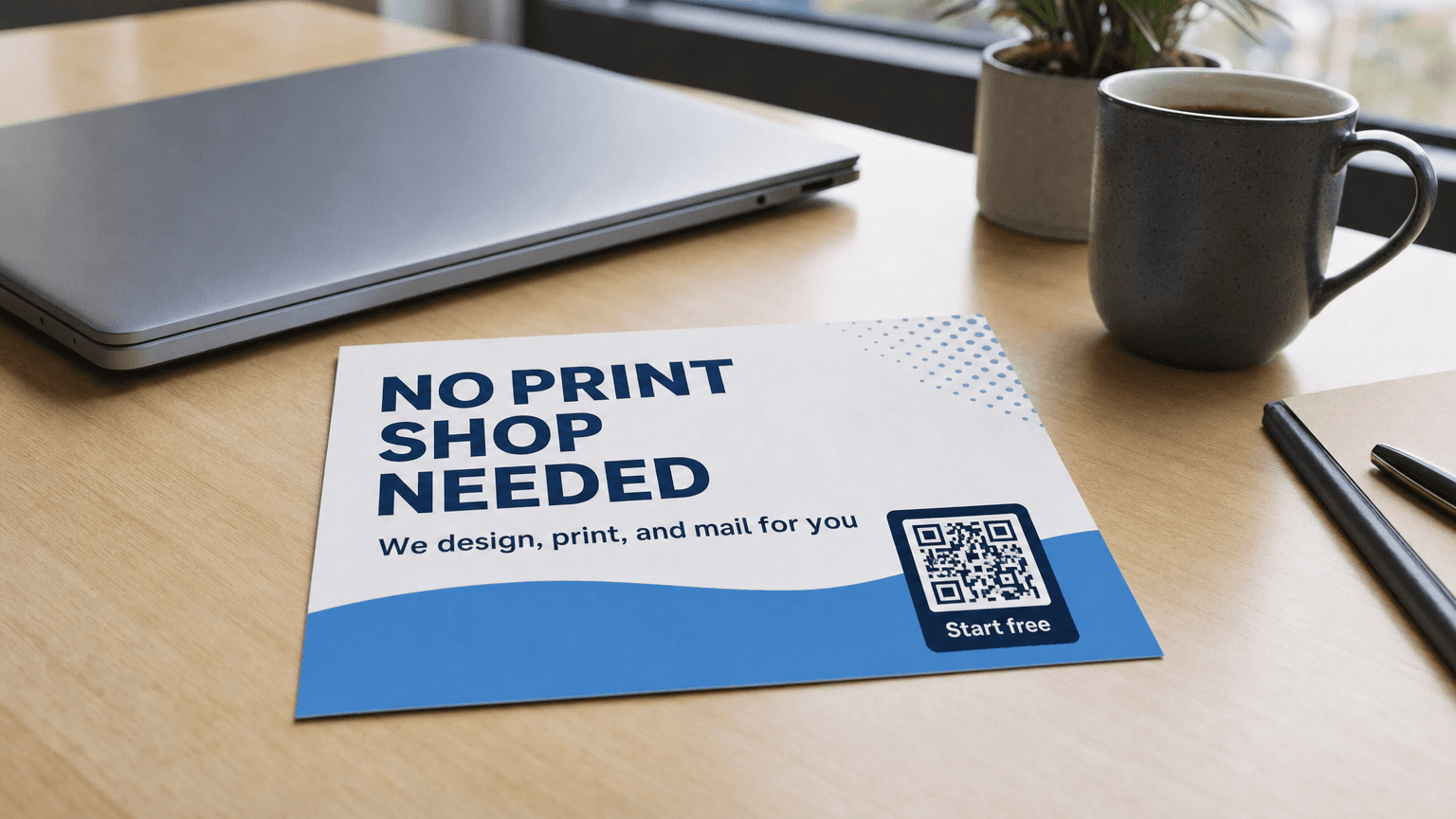
No list broker. No copywriter. No designer. No print shop. No mailing house. The bottlenecks that make traditional direct mail slow and expensive are removed from the workflow entirely.
For more on the AI design step specifically, see the guide to AI postcard design. For detail on the QR tracking component, see QR code postcards.
Smart Local Targeting: How Magic Mailer Builds Your List
Magic Mailer builds your audience automatically using smart local targeting, pulling from verified business and address data in your chosen area so you do not have to purchase a list, clean a spreadsheet, or format addresses for postal submission.
You have two audience modes:
Business targeting. If your offer is aimed at other businesses, a commercial cleaning company targeting office buildings, a restaurant supplier reaching nearby kitchens, a B2B service provider going after businesses in a specific district, Magic Mailer identifies the businesses in your target area and builds the mailing list from verified addresses.
Neighbourhood drop. If your offer is aimed at households, a home services company, a local retailer, a restaurant reaching nearby residents, Magic Mailer targets the households around your chosen location and builds a residential list for a saturation drop.
In both cases, the targeting is geographic, not behavioural. You define the area; Magic Mailer finds the addresses. This approach works well for businesses with a clear service radius: the people and businesses closest to you are often your most likely customers, and a physical piece in their mailbox reaches them without competing with an inbox.
See the industries page for examples of how specific business types use each targeting mode.
Pricing: What Automated Direct Mail Costs
Magic Mailer pricing runs CA$3.31 per piece for a single send down to CA$1.53 per piece at 5,000 or more pieces, with printing and postage included at every tier, and a free Starter plan with 1,000 build credits requires no credit card to access.
| Volume | Price per piece (CA$) |
|---|---|
| 1 piece | $3.31 |
| 5,000+ pieces | $1.53 |
Printing and postage included at all tiers.
For a detailed breakdown of how per-piece costs compare across campaign sizes, see the guide to postcard marketing cost.
The relevant comparison is not only the per-piece rate. It is the per-piece rate plus the time and vendor costs that traditional direct mail requires. A campaign that costs CA$2.50 per piece in print and postage but also requires a list broker, a designer, and a print-shop coordinator can exceed CA$5.00 per piece in total cost when those inputs are factored in. Automation changes the denominator.
Ready to Send Your First Campaign?
Magic Mailer uses AI to design, print, and mail professional postcards for your business in minutes, not weeks.
Try Magic Mailer FreeWant it set up in your CRM for you? book a meeting
Prefer to just describe it? build your whole campaign in one chat
When to Mail Your Existing Customers vs. New Prospects
The ANA 2023 data is clear that house-list campaigns outperform prospect campaigns on every major metric, so mailing existing customers first delivers the strongest returns, but prospect campaigns remain viable when the audience is well-targeted and the offer is specific.
Here is how to think about the decision:
Mail existing customers when:
- You have a re-engagement offer, a seasonal promotion, or a referral incentive.
- You want to cross-sell a service line that current clients may not know you offer.
- Your house list has gone cold and you want to reactivate lapsed relationships.
- You are testing a new offer before expanding to cold audiences.
The ANA 2023 benchmarks put house-list CPA at US$19 versus US$43 for prospects. That gap reflects the trust deficit you have to overcome with a cold audience, real, but not insurmountable if the offer is strong.
Mail new prospects when:
- You are entering a new geographic area and have no existing customer base there.
- You are targeting a specific business type or neighbourhood where you have no existing relationships.
- You have a clear, low-commitment offer (a free estimate, a first-visit discount, a free consultation) that removes the trust barrier.
- Your existing customer base is too small to scale from and you need to build volume.
Smart local targeting is particularly well-suited to prospect campaigns because it solves the hardest part of prospecting, building a qualified list in a defined geography, without requiring a list purchase.
For a deeper look at the ROI mechanics across both audience types, see the guide to direct mail ROI.
Automated Direct Mail and Your Digital Channels
Physical mail and digital channels perform better together than either does alone, and the Lob 2025 State of Direct Mail report quantifies the lift: 90% of marketers said direct mail enhances the performance of their digital campaigns, and 79% identified direct mail as a top-performing channel in a multi-channel mix.
The mechanism is straightforward. A postcard that lands in a mailbox on Tuesday creates physical awareness. When the recipient sees a retargeting ad on Thursday or receives a follow-up email on Friday, recognition is higher and response likelihood increases. The USPS OIG and Temple University research attributes this to the stronger emotional encoding that physical media produces. A postcard is handled, held, and often displayed, which creates memory traces that a scrolled-past digital ad does not.
The QR code on every Magic Mailer postcard is the bridge between physical and digital. A recipient scans the code, lands on your chosen destination URL, and that scan appears in your dashboard as a tracked engagement. You know which sends are generating digital activity, and you can follow up through digital channels with audiences you know have already engaged with your physical piece.
The Lob 2025 report also found that high performers in direct mail are 32% more likely to use automation than their peers. Automation is not a shortcut. It is the infrastructure that makes consistent, measurable, multi-channel physical mail achievable for businesses that do not have a dedicated direct mail department.
For more on the creative side of combining AI and physical mail, see the guide to AI postcard marketing.
Which Businesses Benefit Most from Automated Direct Mail
Automated direct mail works across industries, but the businesses that see the strongest results share three traits: they have a defined service geography, a clear offer that fits on a postcard, and a customer lifetime value high enough to make the per-piece investment worthwhile.
Home services. Plumbers, electricians, HVAC companies, landscapers, and cleaning services all operate within a defined radius. A neighbourhood drop to households within five kilometres of a job site is a well-proven approach for building dense local coverage over time.
Professional services. Accountants, mortgage brokers, insurance advisors, and lawyers benefit from a physical piece that conveys credibility in a way that a digital ad cannot always match. The trust signals of a professionally printed postcard matter in categories where the client relationship is high-stakes.
Restaurants and food businesses. A grand opening drop, a seasonal menu announcement, or a loyalty offer sent to the households nearest your location puts your brand in front of the most geographically convenient audience.
Retail and local commerce. Boutiques, fitness studios, salons, and specialty retailers use neighbourhood drops to reach residents who live within walking or driving distance.
B2B local services. Commercial cleaning, office supplies, equipment servicing, and business-facing trades use business targeting to reach the specific companies in a district without purchasing a prospect list.
If your business serves a defined area and your offer can be communicated clearly in a few sentences, automated direct mail is worth building into your regular marketing rotation, not as a one-time campaign, but as a consistent channel that compounds over time as your brand becomes familiar in the neighbourhoods and business districts you serve.
Frequently Asked Questions
What is automated direct mail?+
Automated direct mail is marketing technology that handles the full postcard pipeline, audience building, creative production, printing, and delivery, through a single connected system. Instead of coordinating a list broker, copywriter, designer, print shop, and mailing house, you enter your business details and target area, and the platform handles the rest.
How much does automated direct mail cost in Canada?+
Magic Mailer pricing runs from CA$3.31 per piece for a single send down to CA$1.53 per piece at 5,000 or more pieces, with printing and Canadian postage included at every tier. A free Starter plan is available with 1,000 build credits and no credit card required.
What response rate can I expect from direct mail?+
Per the ANA 2023 Response Rate Report, direct mail averages a 5.3% response rate for house lists (existing customers) and 2.9% for prospect lists (new audiences). These are industry benchmarks and averages, so your results will depend on your offer, audience, creative, and timing.
Do I need to build my own mailing list?+
No. Magic Mailer builds your target list automatically using smart local targeting. You choose between targeting businesses near you or households in a defined neighbourhood, and the platform identifies and verifies the addresses, with no list broker or spreadsheet required.
How long does it take to launch an automated direct mail campaign?+
Magic Mailer generates up to three print-ready AI postcard designs in about 60 seconds after you enter your business name, website, and target area. Once you approve the design and audience, the platform handles printing and delivery, which is significantly faster than the three-to-six-week timeline typical of traditional direct mail.
Can I track whether my postcards are generating results?+
Yes. Every Magic Mailer postcard includes a trackable QR code in your brand colours. A dashboard shows sends and QR code scans so you can see which campaigns are generating physical-to-digital engagement.
Sources
- ANA Response Rate Report 2023 — ana.net
- USPS OIG / Temple University, Enhancing the Value of Mail: The Human Response — uspsoig.gov
- Lob State of Direct Mail 2024 — lob.com
- Lob State of Direct Mail 2025 — lob.com
Ready to Send Your First Campaign?
Magic Mailer uses AI to design, print, and mail professional postcards for your business in minutes, not weeks.
Try Magic Mailer FreeWant it set up in your CRM for you? book a meeting
Prefer to just describe it? build your whole campaign in one chat