Key Takeaways
- Physical mail lands two to four days before opening to give nearby workers time to plan a visit without forgetting the card.
- Nearby business targets (offices, gyms, salons, schools) drive repeat dine-in visits, and a neighbourhood drop reaches the households nearby; Magic Mailer builds either list.
- A complimentary appetizer or opening-week prix fixe offer lowers the barrier to a first visit without permanently discounting your menu.
- A QR code linked to your reservation page with UTM tracking makes the campaign fully measurable from day one.
- A second send two to three weeks after opening converts the warm audience from the first drop into confirmed regulars.
- Magic Mailer finds nearby businesses via smart local targeting, designs the postcard with AI brand extraction, and includes printing and postage from CA$1.53 per piece at volume.
Opening a restaurant is an act of optimism. You have spent months on the lease, the menu, the staff, and the brand. The one thing you cannot afford is an empty dining room on opening week.
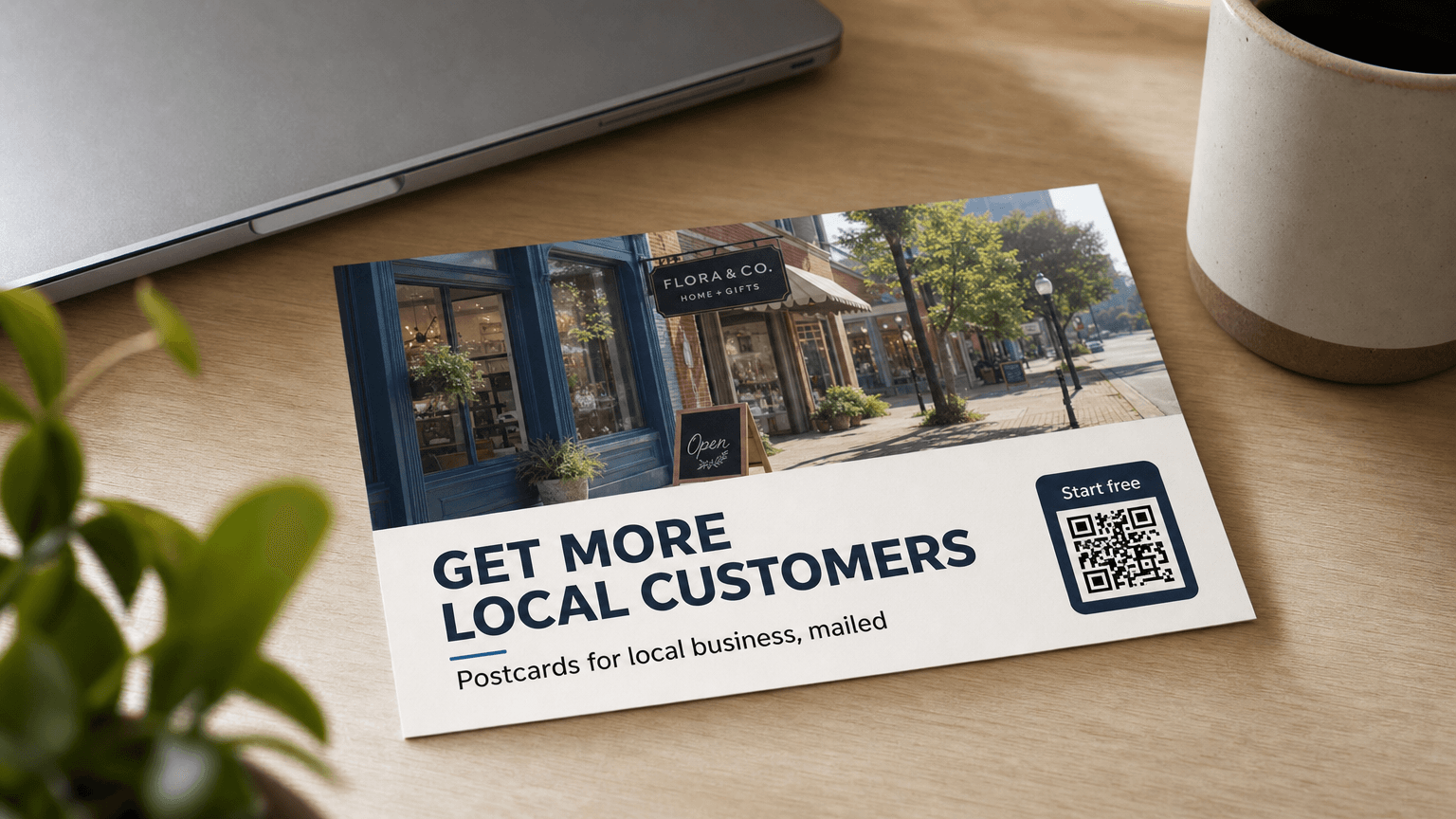
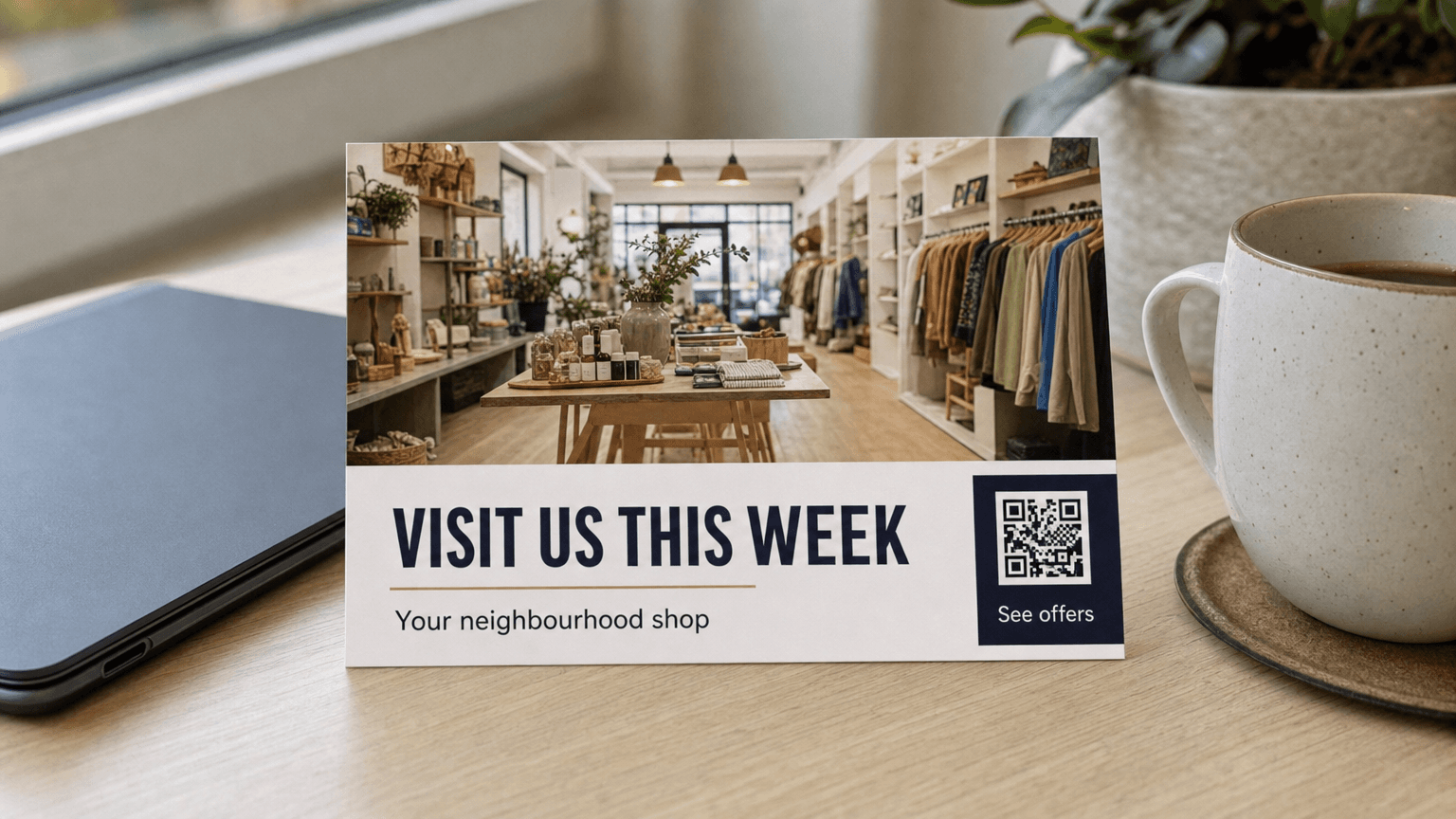
Digital ads run the same night you launch. Social posts disappear in a feed inside four hours. A physical postcard lands on a desk, gets propped against a monitor, and sits there until someone acts on it. This guide walks through how to use direct mail to reach the businesses closest to your restaurant, deliver a compelling opening offer, and build the regular-customer base you need from week one.
For a deeper look at why direct mail works for restaurants in general, see the Direct Mail for Restaurants hub.
Magic Mailer identifies who you should reach and builds the target list for you, whether that is the businesses near you or the neighbourhoods around you, then designs and mails the postcard.
Why Physical Mail Outperforms Digital Noise at Launch
Physical mail commands attention that digital channels cannot replicate at launch. Direct mail to a new prospect generates a 2.9% response rate per the ANA 2023 report, and 84% of marketers rank it among their highest-ROI channels per Lob 2024. For a new restaurant with zero reviews and no email list, those numbers matter.
Here is the deeper reason it works at launch specifically: digital ads require an existing signal. Retargeting needs website visitors. Social ads need an audience seed. A grand opening means you have none of that. You are introducing yourself to strangers.
A postcard does not need a prior relationship. It arrives in someone's hands, carries your brand, states your offer, and survives long enough for the recipient to share it with a colleague or pin it to a break-room board. Research from the USPS OIG and Temple University found that physical mail produces stronger memory encoding than digital formats, meaning recipients recall the message longer after exposure. That recall window is exactly what you need when your goal is to get someone in this week.
90% of marketers say direct mail enhances the performance of their digital campaigns, per Lob 2025. A postcard that drives someone to your Instagram or OpenTable reservation page multiplies every dollar you spend on those channels.
Who to Reach: Nearby Businesses Over Households
Restaurant marketing can target two audiences: the households around you and the businesses nearby. That approach works for delivery and catering, but for a grand opening focused on filling the dining room at lunch and dinner, the better target is the nearby business community.
Office workers, gym members, salon clients, school staff, hotel guests, and retail employees are all within walking or short-drive distance of your location. More importantly, they return on a schedule. A lawyer who discovers your restaurant for a Wednesday lunch becomes a three-times-a-week regular. A gym instructor who grabs a post-workout meal on Friday brings friends.
Targeting businesses rather than households gives you three advantages:
| Advantage | Why It Matters for a Grand Opening |
|---|---|
| Predictable visit windows | Office workers eat lunch at noon; you can staff accordingly |
| Group orders | One person convinces five colleagues; one postcard drives a table of six |
| Word-of-mouth density | Close-proximity workers talk; a great experience spreads fast |
| Repeat visit potential | Business routines create dining routines |
The 20 business categories worth prioritizing in the first send include corporate offices, law firms, medical and dental clinics, fitness studios, hair and beauty salons, hotels, retail shops, co-working spaces, schools and universities, and government offices. Any category whose staff takes a regular lunch break is a target.
Ready to Send Your First Campaign?
Magic Mailer uses AI to design, print, and mail professional postcards for your business in minutes, not weeks.
Try Magic Mailer FreeWant it set up in your CRM for you? book a meeting
Prefer to just describe it? build your whole campaign in one chat
The Grand Opening Offer: What to Put on the Postcard
Your offer needs to do one thing: lower the barrier to a first visit during opening week. The offer should feel genuinely valuable without training customers to expect a permanent discount.
Three formats that work well for business-to-business grand opening mail:
Opening-week prix fixe. A set two-course lunch at a fixed price (CA$22-CA$28 depending on your market) signals value without discounting your full menu. It also speeds service, which matters for the lunch crowd.
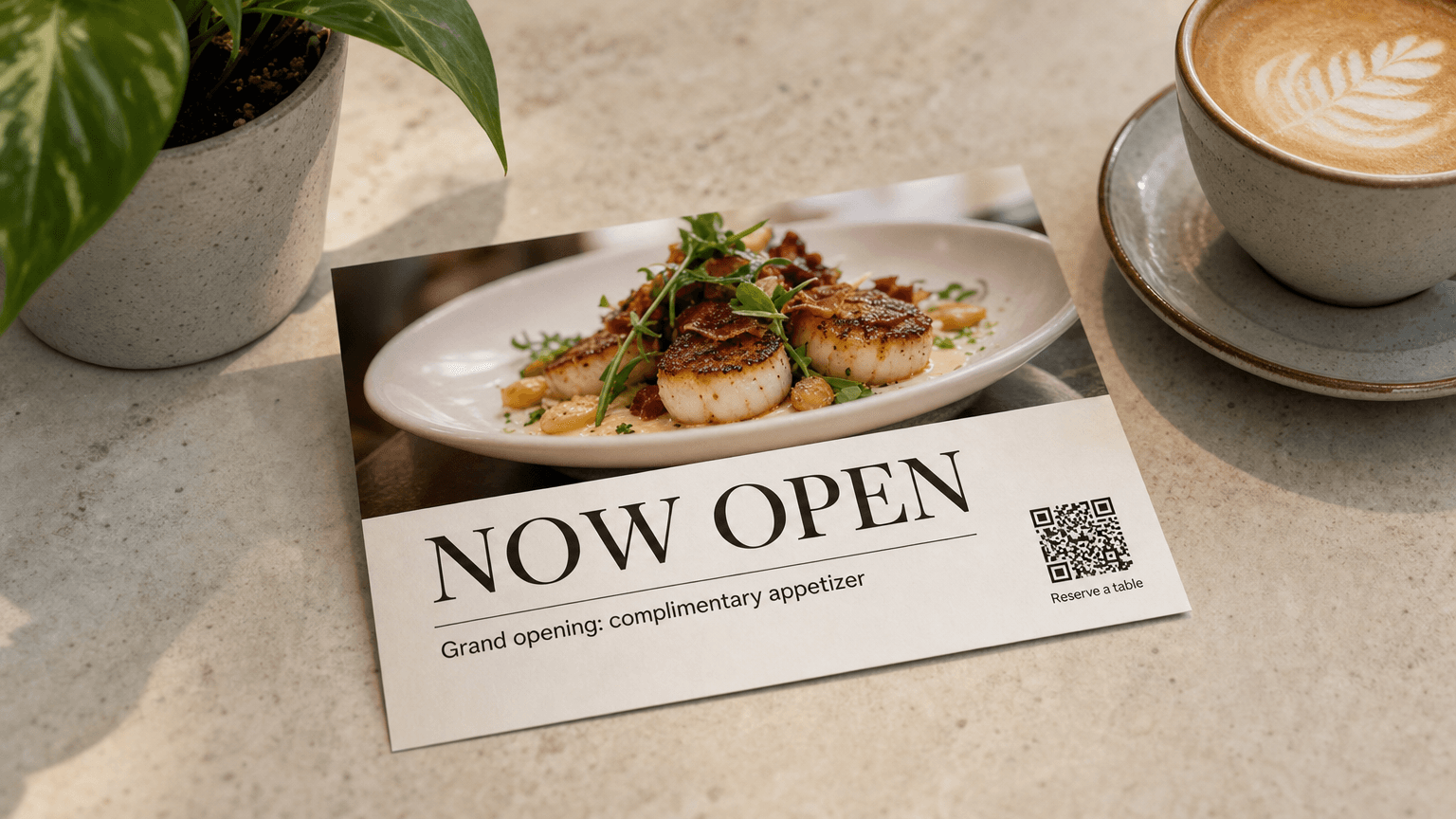
Complimentary appetizer with any main. This is a low-cost offer for you and high-perceived-value for the recipient. The phrase "complimentary" reads differently than "free" and fits a premium positioning.
Priority reservation access. If you have a tasting menu, a patio with limited seating, or a chef's counter, offering early-access reservations to postcard holders creates urgency without discounting at all. Include the QR code to your OpenTable or Resy page.
Whichever offer you choose, the postcard needs five elements:
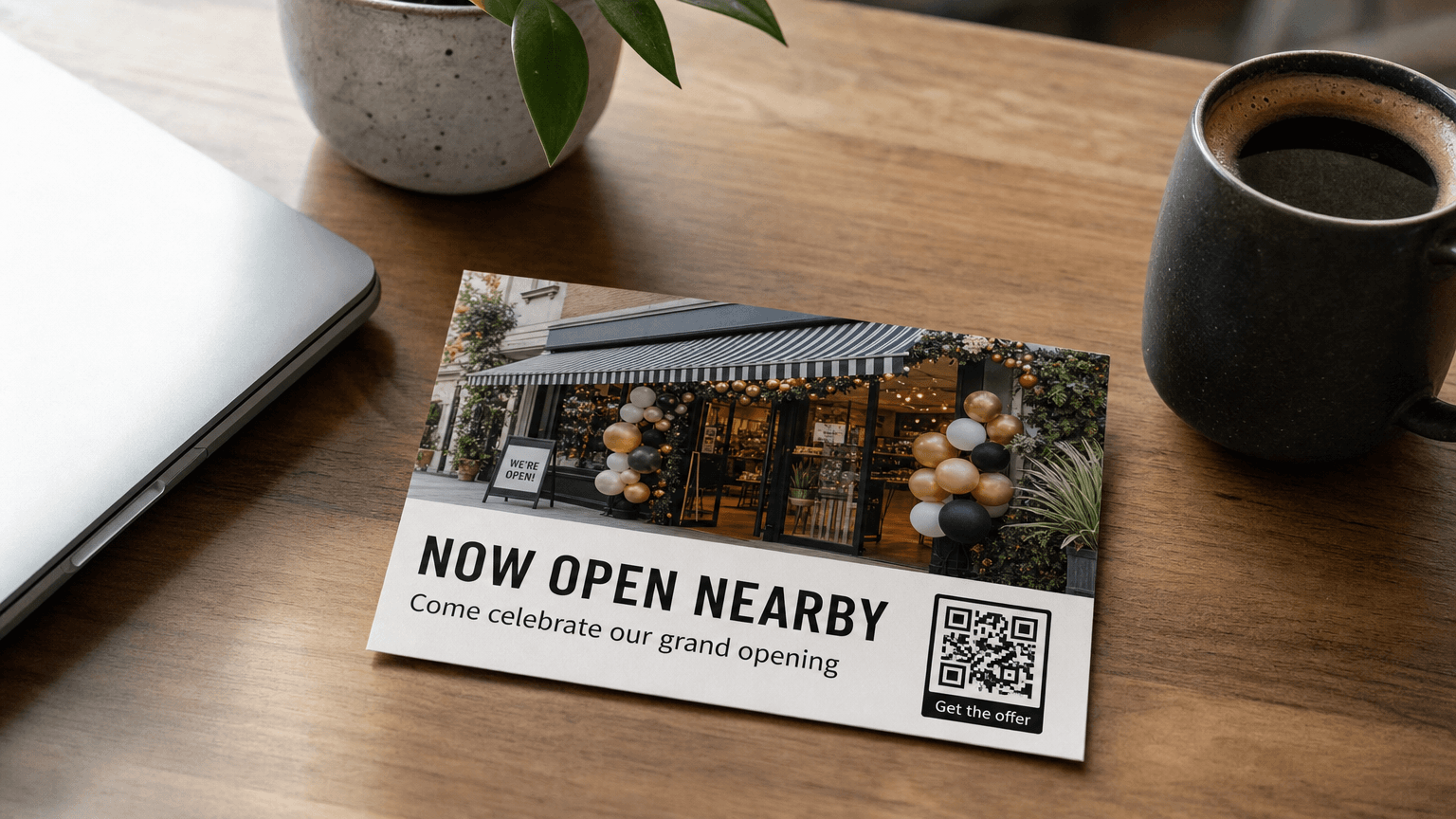
- A strong hero image of the food or the space (not a logo lockup)
- Your restaurant name and cuisine type in the first line of copy
- The offer, clearly stated, with the expiry date
- Your address and the distance from the recipient's building ("3 minutes from your office")
- A QR code linking to your reservation page or menu
For detailed guidance on postcard layout and design hierarchy, see the Postcard Design Guide.
The Mailing Timeline: When Mail Needs to Land
Timing is the variable most restaurants get wrong. A postcard that arrives the day after opening is a missed opportunity. A postcard that arrives three weeks before is forgotten.
The optimal window is for mail to land two to four business days before your opening date. That gives recipients enough time to make plans, tell colleagues, and book a table, without so much lead time that the postcard disappears under a pile of other mail.
Backward-plan from your opening date:
| Day | Action |
|---|---|
| Opening day minus 21 | Confirm design, offer, and QR link |
| Opening day minus 18 | Submit mailing order; print production begins |
| Opening day minus 10 | Mail enters postal stream |
| Opening day minus 3 to 2 | Postcards land on desks |
| Opening day | Dining room receives warm, informed guests |
This timeline assumes standard delivery. For a Friday or Saturday opening, mail on the Wednesday of the week prior so postcards arrive Tuesday through Thursday, giving your audience two to three days to plan a weekend visit.
If your grand opening is a ticketed or invite-only event on a specific evening, mail the event postcard four to five weeks out and follow it with a reminder send two weeks before the event date.
How to Send: Magic Mailer's Self-Serve Business-Targeting Flow
Magic Mailer is built for exactly this use case. You drop your restaurant's address, select the business categories you want to reach (offices, gyms, salons, and so on, up to 20 industry types), and the platform finds every matching business within your chosen radius using smart local targeting data.
AI brand extraction reads your website or your uploaded assets and designs an on-brand postcard automatically. You review and adjust the design, add your offer and QR code, confirm the recipient list, and place the order. Printing and postage are included in the per-piece price.
Pricing runs from CA$3.31 per piece for a single card down to CA$1.53 per piece at 5,000 pieces. For a 300-business neighbourhood send, you are looking at roughly CA$650 to CA$750 all-in, covering design, print, and delivery. No card is required to start. The free Starter plan includes 1,000 build credits so you can explore the list size and design before committing.
For comparison, a 300-impression local social ad campaign might generate 8 to 12 clicks on a good day. A 300-postcard send to businesses generates physical impressions in the hands of decision-making professionals, with a prospect response rate of 2.9% per the ANA 2023 report and a recall advantage that digital cannot replicate per USPS OIG research.
See the How to Send a Postcard guide for a step-by-step walkthrough of the mailing flow.
The Second Send: Keeping Opening Momentum Alive
The single biggest mistake restaurants make with grand opening mail is treating it as a one-time event. The businesses you mailed before opening are now aware of you. A second postcard two to three weeks after opening turns awareness into action.
The second send should serve a different purpose than the first. Where the first postcard announced and offered, the second postcard reinforces and reminds. Effective approaches:
Highlight a popular dish. "Our signature dish sold out three times in the first two weeks" is social proof in a sentence. Pair it with a lunch offer for groups of four or more.
Introduce a recurring event. Happy hour, a weekly prix fixe, a themed dinner night. Give nearby office workers a reason to put your restaurant on their weekly calendar.
Personalize by business type. If you have the segment data, a postcard to fitness studios can reference a protein-forward menu item differently than a postcard to law offices. 88% of marketers report that personalization drives direct mail performance per Lob 2025. Even a small headline swap by category significantly lifts response.
The second send also recaptures people who received the first card but did not act. Frequency matters in direct mail; a single exposure rarely drives maximum response. The combination of two timely sends is what converts a curious neighbour into a confirmed regular.
Ready to Send Your First Campaign?
Magic Mailer uses AI to design, print, and mail professional postcards for your business in minutes, not weeks.
Try Magic Mailer FreeWant it set up in your CRM for you? book a meeting
Prefer to just describe it? build your whole campaign in one chat
Measuring What Worked
Direct mail is measurable. The tools are straightforward:
QR code tracking. Use a unique UTM parameter on the QR link for your opening campaign versus your second send. This tells you which drop drove reservation clicks and when.
Offer redemption. If you print a unique offer code on the postcard ("Show this card for your complimentary appetizer"), your front-of-house staff can log redemptions. Even a tally mark count gives you a response number.
Reservation source tagging. If your reservation platform (OpenTable, Resy, or a direct booking form) includes a "how did you hear about us?" field, add "postcard" as an option. Guests who booked through the QR code will self-report at a meaningful rate.
Cover count by week. Compare opening-week covers to week two and week three. A sustained lift in week three, following your second send, is a direct attribution signal.
None of these require sophisticated analytics infrastructure. They require consistent collection from day one. Set up the tracking before the first card goes to print, not after.
The Opening-Week Playbook at a Glance
| Week | Action | Goal |
|---|---|---|
| 3 weeks before opening | Build business list, finalize design and offer | Readiness |
| 18 days before opening | Submit first mailing order | Print and ship |
| 3 to 2 days before opening | Cards land at nearby businesses | Awareness and booking |
| Opening week | Track QR clicks, reservation source, redemptions | Measure response |
| 2 to 3 weeks after opening | Second send with social-proof messaging | Conversion of warm audience |
| Ongoing | Monthly or quarterly sends to top business categories | Retention and regulars |
The(/magic-mailer/direct-mail-restaurants) flow supports the full sequence, including saving your business list for repeat sends so you are not rebuilding the targeting from scratch each time.
Your opening week is the moment when every dollar of effort you have put into the restaurant becomes visible to the public. A physical postcard in the hands of the professionals working within a five-minute walk of your door is one of the most direct paths from that investment to a full dining room.
Frequently Asked Questions
How many businesses should I mail for a restaurant grand opening?+
A radius that captures 200 to 500 businesses is a productive starting point for most urban or suburban locations. That range covers the offices, gyms, salons, and retail shops whose staff are within a five-to-ten minute walk or drive, without spreading the budget so thin that frequency drops below two sends. Use Magic Mailer's list preview to see how many businesses fall in your target radius before committing.
What is the best offer to put on a grand opening postcard for restaurants?+
A complimentary appetizer with any main course or an opening-week prix fixe lunch at a set price both perform well. The complimentary appetizer works because the perceived value is high and the cost to you is low. The prix fixe works because it signals value and speeds table turns during a busy opening week. Avoid percentage-off discounts, which can undermine your price positioning before you have established it.
How do I track whether my grand opening postcard worked?+
Print a unique QR code with a UTM parameter on the card and link it to your reservation or menu page. Track redemptions at the door if you include an offer code. Add a 'how did you hear about us?' field to your reservation form with 'postcard' as an option. Compare cover counts in opening week versus the two weeks following your second send to identify the lift driven by that drop.
How much does it cost to mail postcards to nearby businesses for a restaurant opening?+
Magic Mailer pricing runs from CA$3.31 per piece for a single card to CA$1.53 per piece at 5,000 pieces, with printing and postage included. A 300-business send lands in the CA$650 to CA$750 range all-in. The free Starter plan includes 1,000 build credits so you can build and preview your list and design before placing an order.
Should I mail households or businesses for a restaurant grand opening?+
Either works, and Magic Mailer builds the list for you. For a dine-in opening focused on lunch and dinner, nearby businesses are a high-value target: office workers, gym members, and retail staff return on predictable schedules and bring colleagues. A neighbourhood drop to the households around you is ideal for delivery, family dining, and broad local awareness.
Sources
- ANA Response Rate Report 2023 — ana.net
- USPS OIG / Temple University, Enhancing the Value of Mail: The Human Response — uspsoig.gov
- Lob State of Direct Mail 2024 — lob.com
- Lob State of Direct Mail 2025 — lob.com
Ready to Send Your First Campaign?
Magic Mailer uses AI to design, print, and mail professional postcards for your business in minutes, not weeks.
Try Magic Mailer FreeWant it set up in your CRM for you? book a meeting
Prefer to just describe it? build your whole campaign in one chat