Key Takeaways
- Office workers within 1.5 km decide where to eat every weekday, making them a high-frequency, repeat-purchase audience worth targeting with a dedicated campaign.
- Magic Mailer identifies nearby businesses via smart local targeting across 20 industries, so your postcard list reflects active workplaces rather than stale purchased data.
- A first-visit group discount, a per-head set-price deal, or a QR-linked loyalty punch card each lower the friction for a team to book their first lunch.
- Send timing matters: aim for Monday or Tuesday arrival by submitting your campaign the prior Tuesday or Wednesday.
- A 300-piece office lunch campaign can pay for itself on the first visit of five new group tables, with all subsequent visits contributing to margin.
- Combining a physical postcard with a QR code to online ordering or group booking bridges print impact with measurable digital conversion.
Weekday lunch is a recurring, high-frequency revenue window. Office workers within a short walk of your restaurant decide where to eat five days a week, fifty weeks a year. Winning that decision once often means winning it repeatedly. This guide walks through the full playbook: identifying the right offices, crafting an offer that travels well on a postcard, timing the send, and converting a first table into a standing account.
Magic Mailer identifies who you should reach and builds the target list for you, whether that is the businesses near you or the neighbourhoods around you, then designs and mails the postcard.
Why Nearby Offices Are Your Best Lunch Prospect
Office workers who eat out for lunch represent a captive, repeat-purchase audience within your delivery or walk radius. Unlike a household that orders takeout once a month, a five-person team ordering lunch together two or three times a week generates more annual revenue per account than most residential customers. The decision of where to go is made fresh each morning, which means a well-timed physical reminder lands exactly when consideration is highest.
According to ANA 2023 data, direct mail to prospect lists generates a 2.9% response rate on average, with house lists reaching 5.3%. For a restaurant mailing 500 nearby businesses, even the lower prospect rate represents roughly 14 new groups walking through the door from a single send. For the math to work in your favour, you do not need to convert every recipient. You need to convert enough to recoup the send cost on the first visit and retain a fraction as regulars.
The office-lunch segment also has a group-decision dynamic that amplifies word-of-mouth. One person who receives a postcard and mentions it to four colleagues has done your marketing for you.
Ready to Send Your First Campaign?
Magic Mailer uses AI to design, print, and mail professional postcards for your business in minutes, not weeks.
Try Magic Mailer FreeWant it set up in your CRM for you? book a meeting
Prefer to just describe it? build your whole campaign in one chat
Finding the Right Offices Within Your Radius
Pinpointing which businesses are worth mailing starts with geography and industry. The practical walk-or-drive radius for a weekday lunch crowd is roughly 800 metres to 1.5 kilometres in a dense urban core and up to three kilometres in suburban office parks. Beyond that, you are competing with options nearer to your prospect's building.
Magic Mailer uses smart local targeting data across 20 business categories to surface workplaces near your restaurant address. You enter your location, choose a radius, and filter to office-heavy categories: professional services, financial services, technology, healthcare administration, legal, insurance, and so on. The platform returns a mailable list of businesses at those addresses, so you are reaching the physical workplace rather than a residential address.
A few targeting principles worth building in:
| Filter | Why It Matters |
|---|---|
| Office density (multi-tenant buildings) | One building may hold 10+ separate teams |
| Industry (white-collar vs. trade) | White-collar workers eat out more frequently on weekdays |
| Distance band | Closer prospects convert at higher rates; mail the inner ring first |
| Business size (where available) | Mid-size teams (5 to 25 people) are the sweet spot for group-lunch offers |
Because Magic Mailer pulls smart local targeting data in real time, the list reflects businesses that are actually operating, not a stale purchased list. This matters for postcard deliverability and for avoiding waste on addresses that are no longer active.
Designing the Offer That Travels on a Postcard
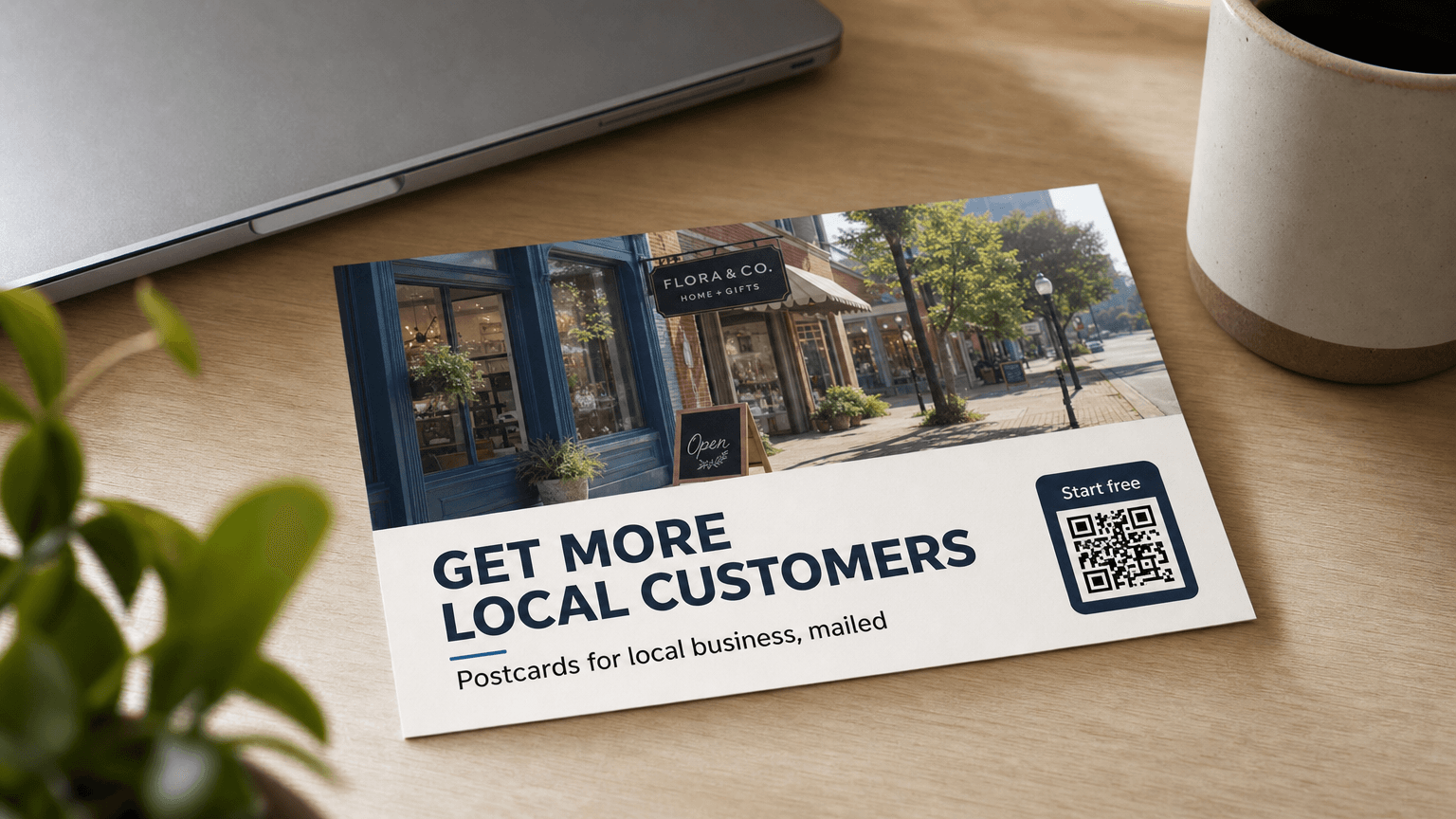
A postcard has limited real estate and competes with everything else in a physical inbox. The offer must be legible in under five seconds and answer a single question: what do I get, and what do I do next?
Three offer structures work well for the restaurant-to-business lunch context:
First-visit discount: A percentage or flat-dollar reduction on the first team lunch. This lowers the perceived risk of trying somewhere new. Frame it as a group benefit: "Bring your team of four or more and take 15% off your first lunch."
Group or team lunch deal: A set price per person that includes a main and a non-alcoholic drink. Offices making group reservations want predictable per-head costs so they can expense the meal without surprises. A posted price removes friction from the booking decision.
Loyalty punch card or QR-based rewards: A digital punch card linked from the QR code on the postcard allows someone who visits once to start accumulating credit toward a free meal. This creates a reason to return even after the first-visit offer expires.
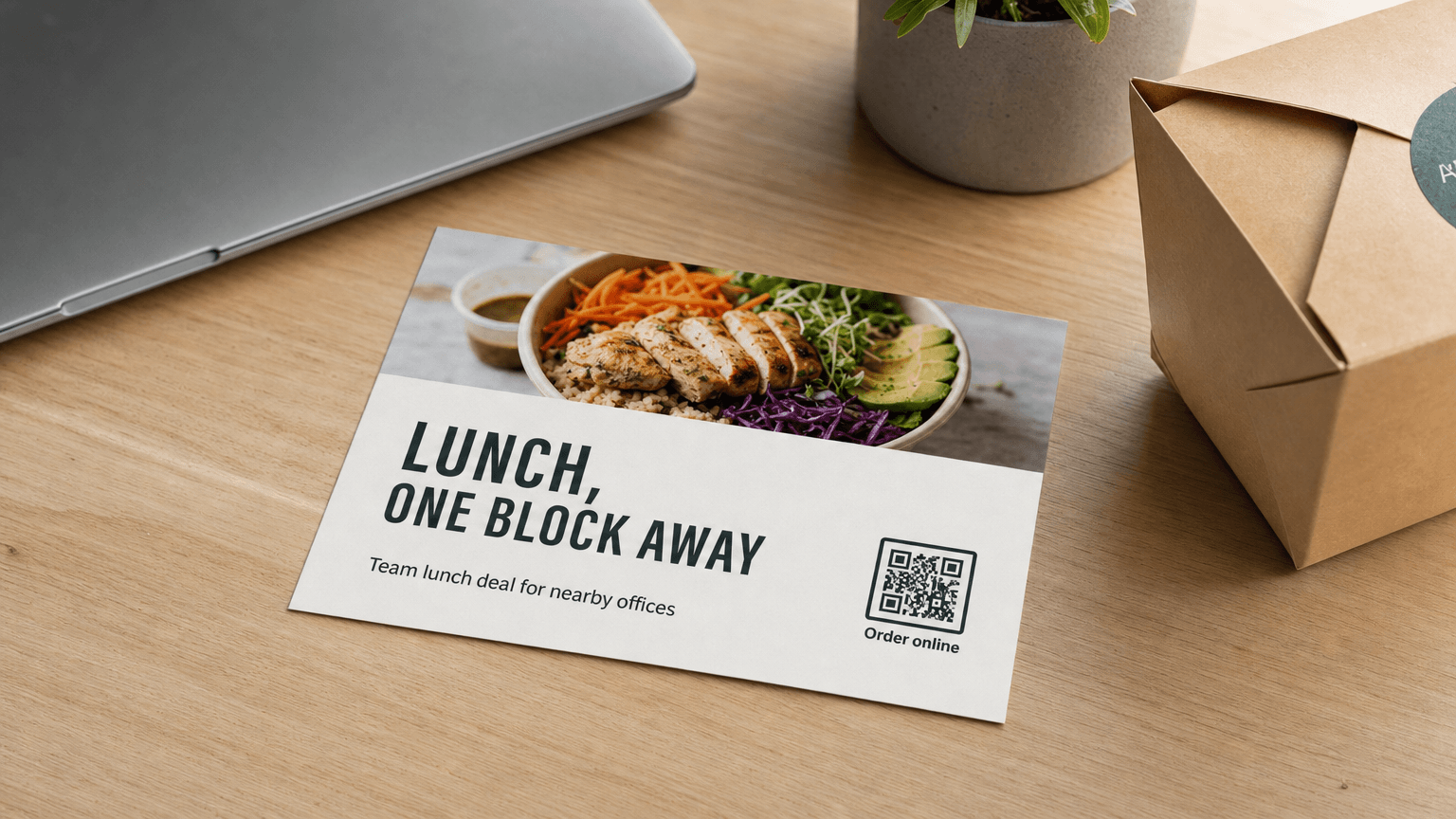
For the copy itself: lead with the outcome, not the mechanism. "Your next team lunch, one block away" outperforms "We are a restaurant near you." State the offer, the address, the hours, and the QR code destination on the front. Keep the back of the card for your menu highlight, a photo of your space, and your group booking contact.
Magic Mailer's AI brand extraction pulls your logo, colours, and visual identity from your website and builds a postcard template matched to your brand. You review and approve the design before anything goes to print.
Adding a QR Code That Does Work
A QR code on a postcard bridges the physical piece to your digital booking or ordering flow. According to Lob 2025 research, 90% of marketers say direct mail enhances digital channel performance, and a QR code is the most direct mechanism for that handoff.
For a restaurant lunch campaign, the QR destination should be specific, not generic. Sending someone to your homepage wastes the momentum the postcard created. Instead, point to:
- An online ordering page pre-loaded with your lunch menu
- A group booking form with a field for party size and preferred time
- A landing page that shows the lunch special, confirms the offer code, and has a one-tap call button
The URL behind the QR code should include a UTM parameter or unique tracking slug so you can attribute online orders and reservations to the postcard campaign. This closes the measurement loop: you know the send cost, and you can see the revenue the QR traffic generated.
Magic Mailer generates the QR code as part of the postcard design and links it to the URL you specify. You are not managing a separate QR tool or a third-party redirect.
Timing Your Send for Maximum Weekday Impact
Postal delivery timing varies, but in most Canadian markets a standard-class mailing takes two to five business days from print to doorstep. The goal is arrival on a Monday or Tuesday morning, when the week's lunch decisions are still uncommitted and novelty has not yet worn off.
Work backward from your target arrival date:
| Target arrival | Submit send by |
|---|---|
| Monday | Previous Tuesday |
| Tuesday | Previous Wednesday |
| Wednesday to Friday | Lower priority; weekend arrival risks being set aside |
A single send is a test. A two-wave approach, with the second wave arriving three to four weeks after the first, typically outperforms a single larger send because it captures recipients who were too busy to act the first time. The second postcard can reference the offer expiry to create a soft deadline.
For restaurants near office towers with a high tenant turnover rate, a quarterly refresh of the mailing list and a new send keeps your name in front of businesses that moved in since your last campaign.
Ready to Send Your First Campaign?
Magic Mailer uses AI to design, print, and mail professional postcards for your business in minutes, not weeks.
Try Magic Mailer FreeWant it set up in your CRM for you? book a meeting
Prefer to just describe it? build your whole campaign in one chat
Turning a First Lunch Visit into a Regular Account
Acquiring a new business customer through direct mail is the beginning of the revenue story, not the end. According to ANA 2023, direct mail to house lists generates a 161% ROI, and that figure compounds when first-time visitors become recurring customers.
The steps to convert a first visit into a regular:
-
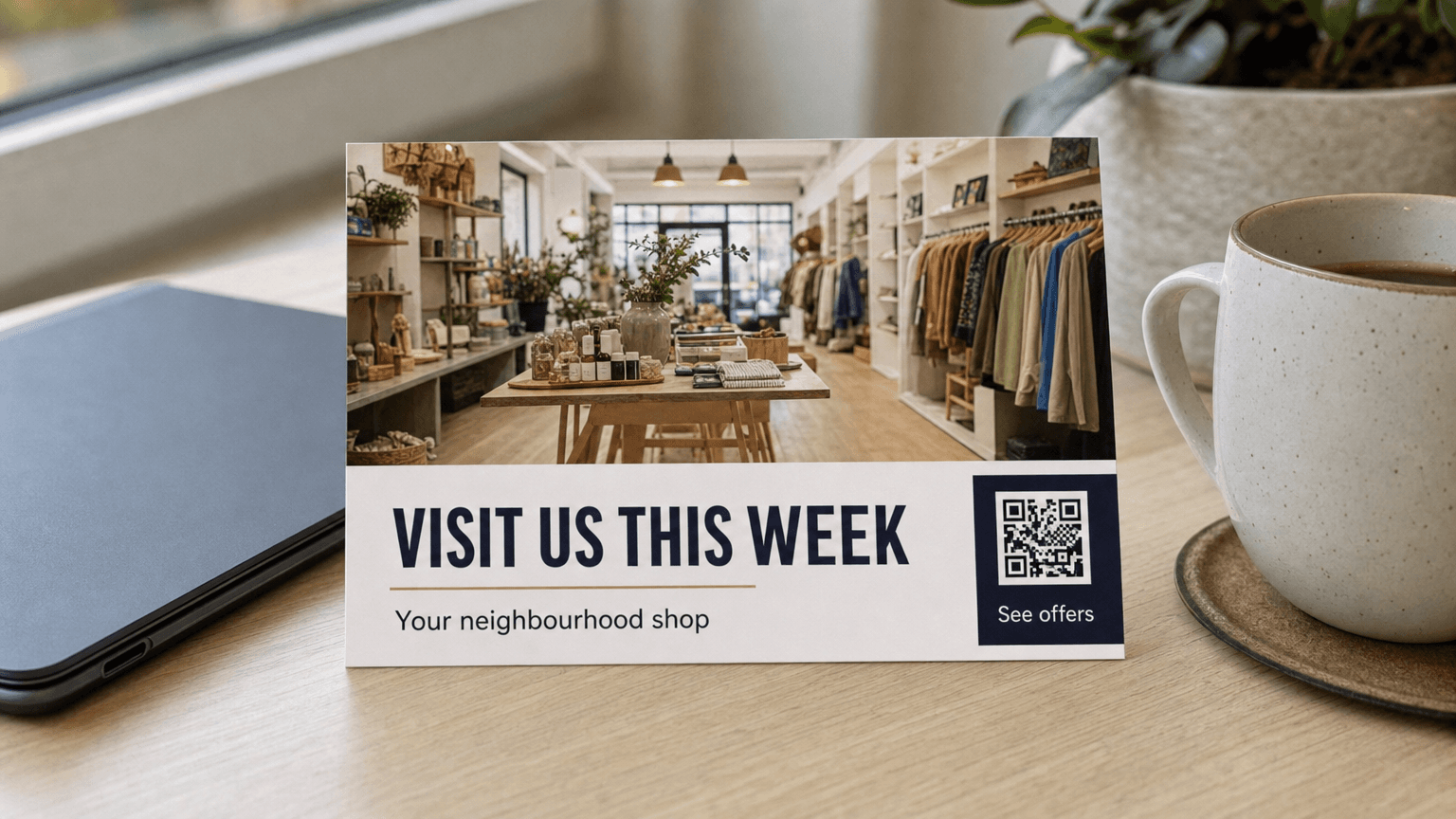
Capture contact at the table. Ask the person who made the reservation for their email or mobile number in exchange for joining a loyalty programme or receiving a monthly lunch special. A QR code on the table tent makes this frictionless.
-
Send a follow-up within 48 hours. A short email or text confirming the loyalty points earned and the next reward milestone reinforces the decision to come back. Research from USPS OIG and Temple University confirms that physical mail enhances memory encoding and emotional engagement compared to digital-only channels, and pairing that physical first impression with a timely digital follow-up strengthens recall.
-
Offer a standing weekly deal for repeat groups. A reserved table every Tuesday at noon, or a 10% standing discount for groups that pre-book, creates a predictable revenue line and reduces the friction of the booking decision each week.
-
Mail again at the 60-day mark. For businesses that visited once and went quiet, a second postcard with a "we miss your team" offer is lower cost than acquiring a new customer and often produces a second visit.
The direct mail for restaurants hub covers the full channel strategy, including seasonal sends, repeat campaigns, and menu-launch mailers. For cost benchmarking across postcard sizes and run lengths, see postcard marketing cost and direct mail ROI.
What a Lunch Campaign Costs and What to Expect
Magic Mailer pricing is per piece, printing and postage included, in Canadian dollars:
| Volume | Price per piece (CA$) |
|---|---|
| 1 | CA$3.31 |
| 5,000+ | CA$1.53 |
For a 300-piece office lunch campaign, you are in the CA$200 to CA$300 range depending on the final per-piece rate at that volume. If the campaign generates five new group lunch tables and each table spends CA$80, you recover the cost on the first visit of each table. The second, third, and fourth visits are pure margin.
The Starter plan is free, includes 1,000 build credits, and requires no credit card. You can complete the full design and preview your postcard before committing to a send.
For restaurants that have not mailed before, a 200-piece pilot to the offices within 500 metres is a low-risk starting point. The data from that send, including QR scans, reservations, and redeemed offer codes, sets the baseline for scaling up.
According to Lob 2024, direct mail delivers the highest ROI of any channel for 84% of marketers who track it, and 88% of marketers say personalization is critical to direct mail performance per Lob 2025. A postcard that names the offer, shows your food, and lands on a real desk on a Monday morning is as personalized as a cold channel gets for a restaurant without an existing customer list.
Weekday lunch is a volume game won by whoever shows up most consistently in the minds of nearby decision-makers. A postcard that arrives Monday morning, offers a clear group deal, and links to a frictionless booking page does that work without a sales team or an ad budget that resets to zero when you stop paying.
Frequently Asked Questions
How many offices can I realistically reach within walking distance of my restaurant?+
In a dense urban neighbourhood, a 1-kilometre radius often contains hundreds of distinct businesses across professional services, finance, tech, healthcare administration, and legal. Magic Mailer pulls live smart local targeting data so you can preview the count for your specific address and radius before committing to a send.
What response rate should I expect from a restaurant lunch direct mail campaign?+
ANA 2023 data shows prospect direct mail averages a 2.9% response rate. For a 300-piece send, that is roughly 8 to 9 new group contacts. Even if only half book a table, the first-visit revenue on a group of four to six typically covers the full send cost.
Does the postcard include a QR code to my online ordering page?+
Yes. Magic Mailer generates the QR code as part of the postcard design and points it to the URL you provide. That can be your online ordering page, a group booking form, or a dedicated landing page with a one-tap call button.
How much does it cost to mail postcards to 300 nearby offices in Canada?+
Magic Mailer pricing runs from CA$3.31 per piece at low volumes down to CA$1.53 per piece at 5,000 pieces. For a 300-piece send you would typically land in the CA$200 to CA$300 range, printing and postage included. The Starter plan is free with no credit card required.
When should I mail to catch office workers before they decide on lunch?+
Target Monday or Tuesday arrival. Work backward from your desired delivery window: submit the send by Tuesday of the prior week for Monday arrival. Weekend arrivals tend to get buried under other mail, reducing recall.
Sources
- ANA Response Rate Report 2023 — ana.net
- USPS OIG / Temple University, Enhancing the Value of Mail: The Human Response — uspsoig.gov
- Lob State of Direct Mail 2024 — lob.com
- Lob State of Direct Mail 2025 — lob.com
Ready to Send Your First Campaign?
Magic Mailer uses AI to design, print, and mail professional postcards for your business in minutes, not weeks.
Try Magic Mailer FreeWant it set up in your CRM for you? book a meeting
Prefer to just describe it? build your whole campaign in one chat